




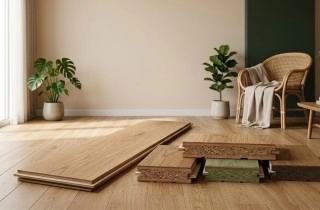
Imported vs. Vietnamese Laminate Flooring: Which Is Better?
Is imported laminate flooring better than Vietnamese laminate flooring? Country of origin alone should not be used to determine flooring quality. Factors such as HDF core quality, 8mm or 12mm thickness, abrasion resistance, moisture resistance, locking system, price, and the intended installation environment are more important when comparing products. This article provides a detailed comparison of both options to help you choose the right flooring for your project and budget.
When choosing laminate flooring, many homeowners find themselves deciding between imported laminate flooring and Vietnamese laminate flooring. A common assumption is that imported products are automatically higher in quality, while domestically manufactured flooring mainly offers an advantage in price. In reality, the comparison is much more nuanced.
The quality of laminate flooring does not depend solely on its country of origin. The core material, thickness, surface layer, abrasion resistance, locking system, moisture resistance, and actual installation environment all have a direct impact on the flooring's durability and performance.
Therefore, instead of simply looking at whether a product is labeled “imported” or “Made in Vietnam,” buyers should compare individual products based on technical specifications, intended use, and budget.
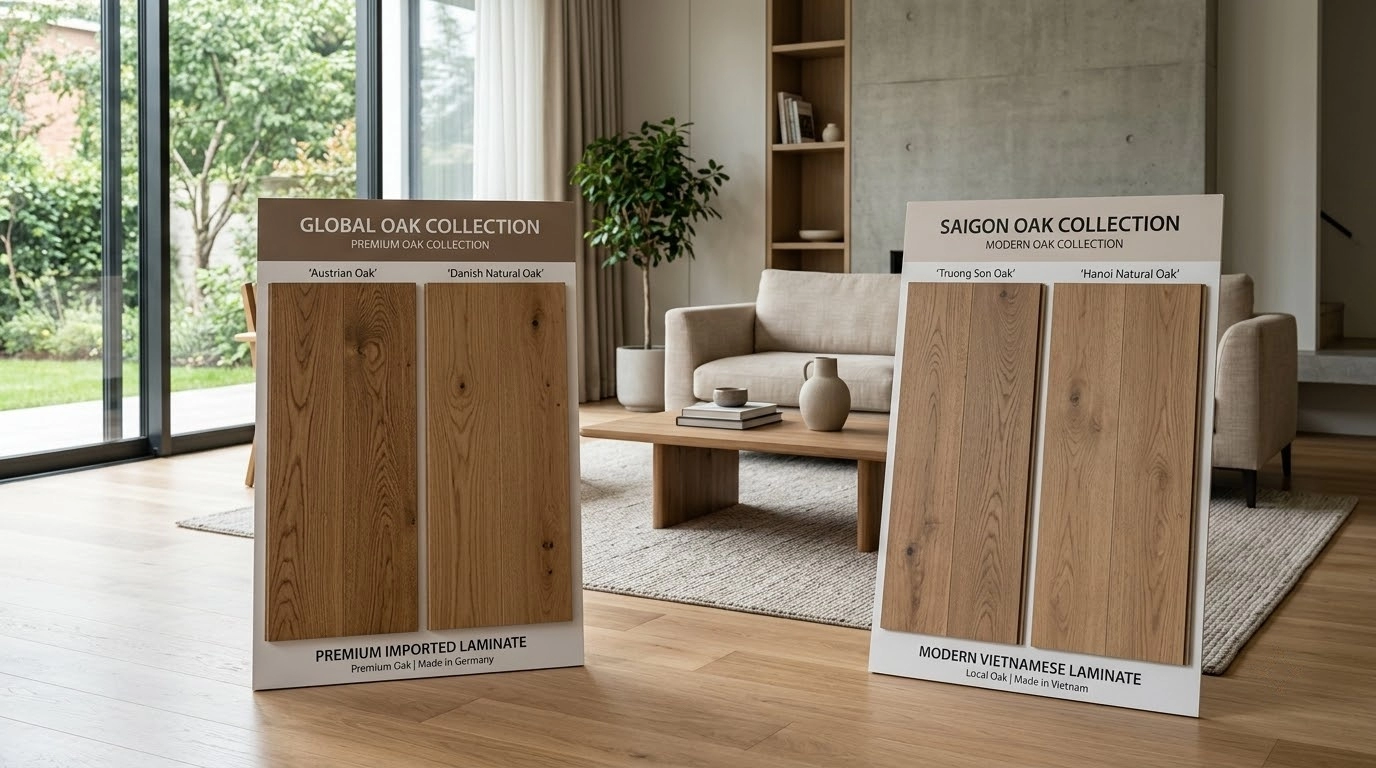
Is Imported or Vietnamese Laminate Flooring Better?
It would be inaccurate to say that all imported laminate flooring is better than Vietnamese laminate flooring. Likewise, the quality of a flooring product cannot be determined solely by where it was manufactured.
Imported laminate flooring often has advantages in segments where buyers are looking for specific technical standards, designs, collections, or established international brands. Vietnamese laminate flooring, meanwhile, can offer competitive pricing, accessible inventory, convenient supply, and a wide range of products developed for local market requirements.
In simple terms:
-
Buyers who prioritize brands, technical standards, and premium product segments may consider imported flooring.
-
Buyers who want to optimize cost and practical performance can find many worthwhile options among Vietnamese laminate flooring products.
-
Regardless of origin, the most important step is to check the construction and specifications of the actual product.
Therefore, instead of asking, “Is imported or Vietnamese flooring better?” a more useful question is:
Which product is better suited to your project, budget, and performance requirements?
What Is Imported Laminate Flooring?
Imported laminate flooring refers to products manufactured outside Vietnam and imported into the country for distribution.
Products from many different countries and regions are available on the market. However, two products described as “imported flooring” do not necessarily offer the same level of quality.
An entry-level flooring product and a premium product can differ significantly in terms of:
-
core density and quality;
-
thickness;
-
abrasion resistance;
-
moisture resistance;
-
locking-system construction;
-
surface quality;
-
wood-grain design;
-
manufacturing standards;
-
warranty coverage;
-
selling price.
For this reason, “imported” should not be treated as an independent quality standard.
When purchasing flooring, buyers should consider where the product was manufactured, which collection or product line it belongs to, what specifications it offers, and whether its origin can be clearly verified.
What Is Vietnamese Laminate Flooring?
Vietnamese laminate flooring refers to flooring products manufactured or finished in Vietnam. Depending on the brand and product line, these products can range from budget-friendly options to mid-range and higher-end collections.
One notable advantage of this category is its ability to respond directly to the requirements of the domestic market.
Manufacturers and distributors can offer different product lines based on:
-
8mm or 12mm thickness;
-
abrasion-resistance ratings;
-
colors and wood-grain designs;
-
plank dimensions;
-
locking systems;
-
price segments;
-
intended applications.
This gives buyers a wide selection for apartments, townhouses, bedrooms, offices, retail stores, homestays, rental properties, and projects where budget control is important.
However, Vietnamese laminate flooring is not a single, uniform category in terms of quality.
A low-priced product should not be used to represent the entire domestic flooring industry. Accurate evaluation requires looking at individual brands, collections, and specific product codes.
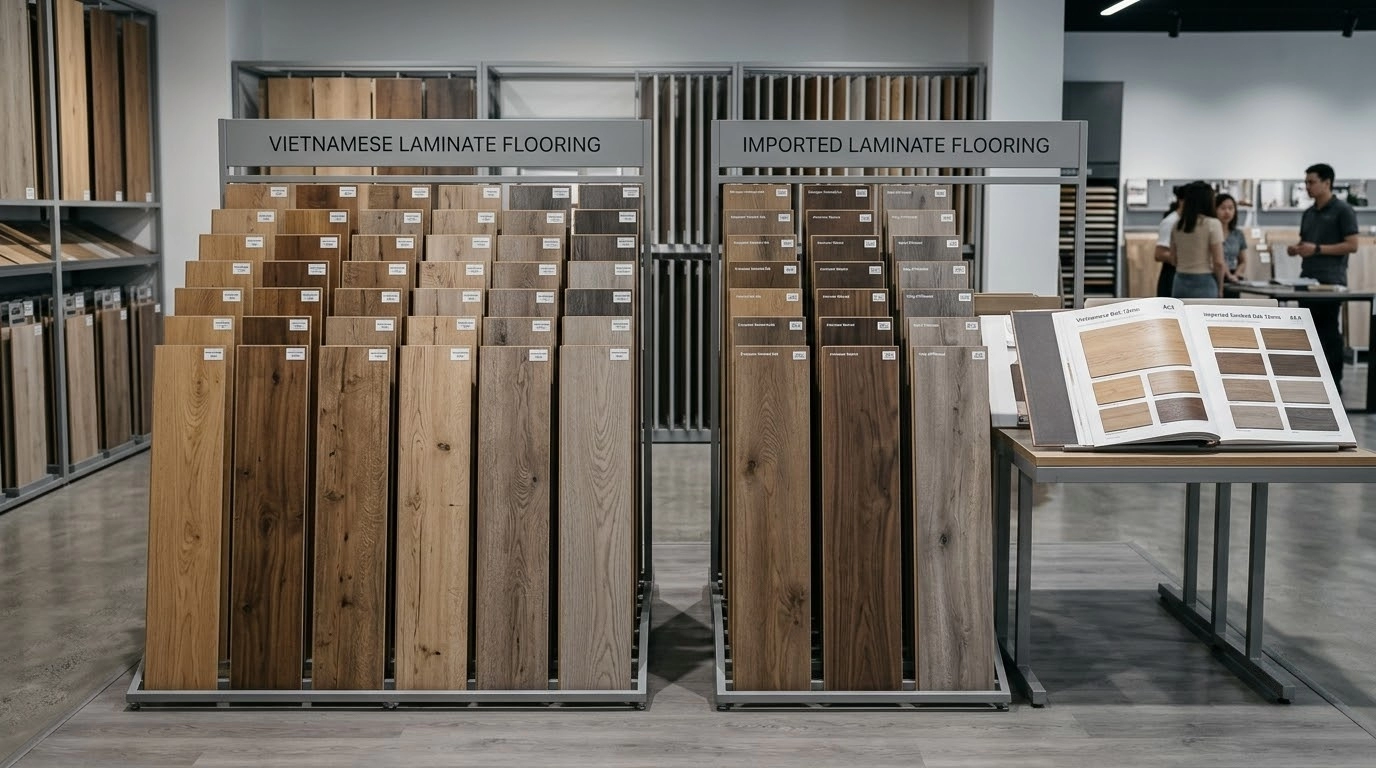
Imported vs. Vietnamese Laminate Flooring Comparison
The following criteria are generally more useful than country of origin when comparing the two categories.
| Criteria | Imported Laminate Flooring | Vietnamese Laminate Flooring |
|---|---|---|
| Product segment | Entry-level to premium | Budget-friendly to higher segments |
| Price | Can be higher due to segment, brand, and import costs | Often offers more budget-accessible options |
| Core material | Depends on manufacturer and product line | Depends on brand and product line |
| Thickness | Available in multiple specifications | Commonly 8mm, 12mm, and other specifications depending on the collection |
| Abrasion resistance | Depends on individual product specifications | Depends on individual product specifications |
| Moisture resistance | Cannot be determined by origin alone | Cannot be determined by origin alone |
| Designs | Collections influenced by different international markets | Many designs developed for local preferences |
| Availability | May depend on import schedules | Often more accessible when domestic inventory is available |
| Replacement | Availability of discontinued product codes should be checked | May be convenient for product lines with stable domestic distribution |
| Best suited for | Buyers seeking particular products or standards | Buyers seeking a balance between cost and practical requirements |
This comparison demonstrates that country of origin is only one part of the purchasing decision. For a fair comparison, two flooring products should be evaluated within a similar price segment and for the same intended application.
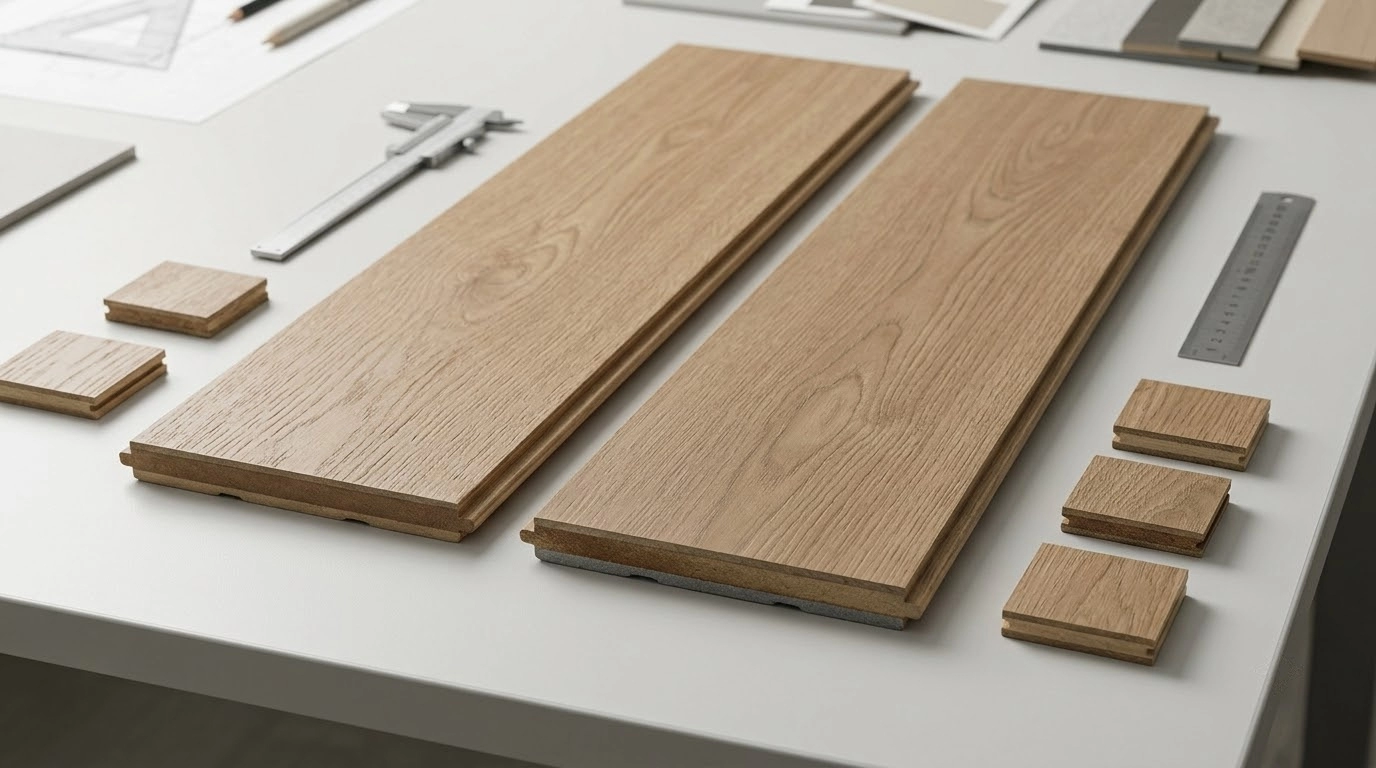
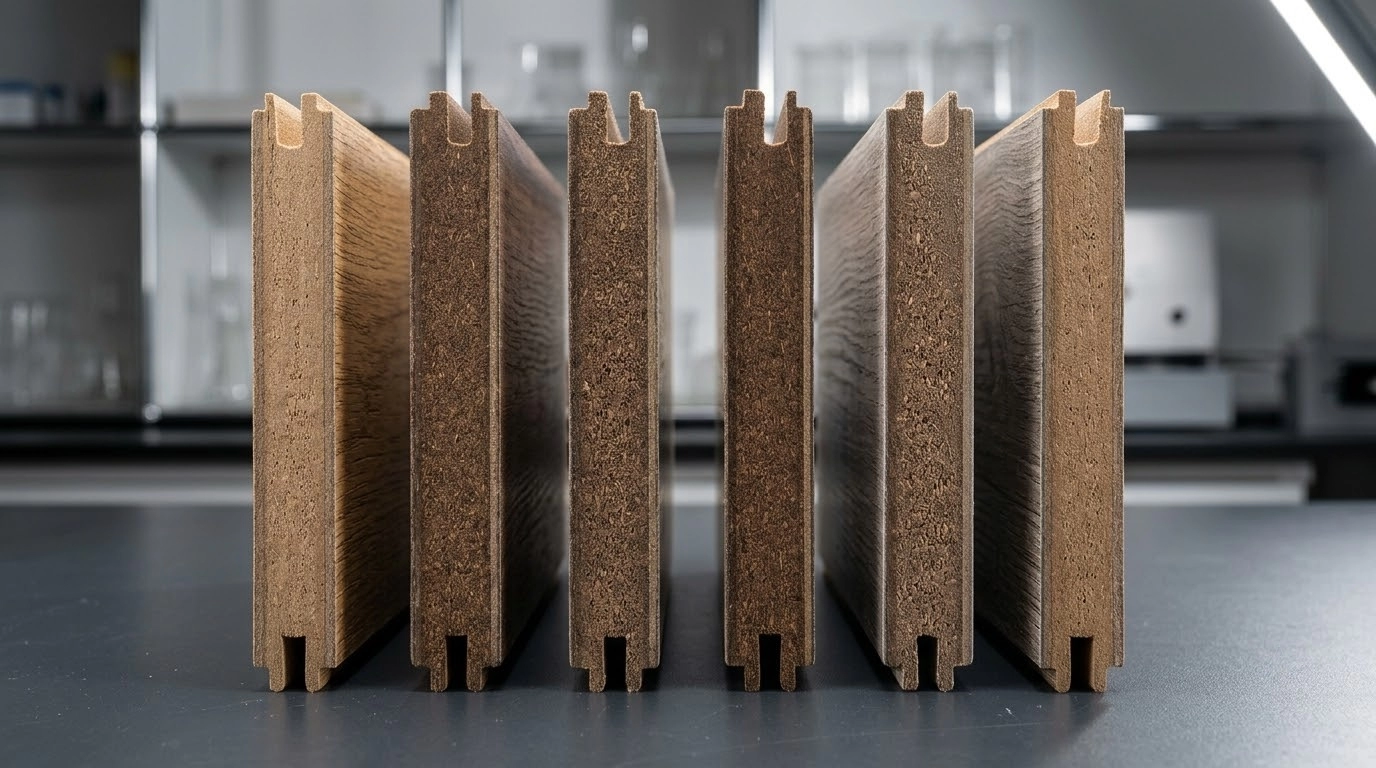
1. Comparing HDF Core Quality
The core is one of the most important components of laminate flooring.
Many products use HDF (High Density Fiberboard) as their primary core material. However, simply seeing “HDF” in a product description is not enough to determine its quality.
Additional factors should be considered, including:
-
core density;
-
dimensional stability;
-
moisture resistance;
-
swelling when exposed to moisture;
-
strength around the locking system;
-
technical specifications and documentation provided by the manufacturer.
An imported flooring product with a core that does not suit a particular application may not be a better choice than a Vietnamese product whose specifications are appropriate for that project.
Conversely, if an imported product offers demonstrably superior construction and standards, its higher price may provide corresponding value.
Therefore, compare core against core and specification against specification, rather than simply comparing one country with another.
2. Does 8mm vs. 12mm Thickness Depend on Origin?
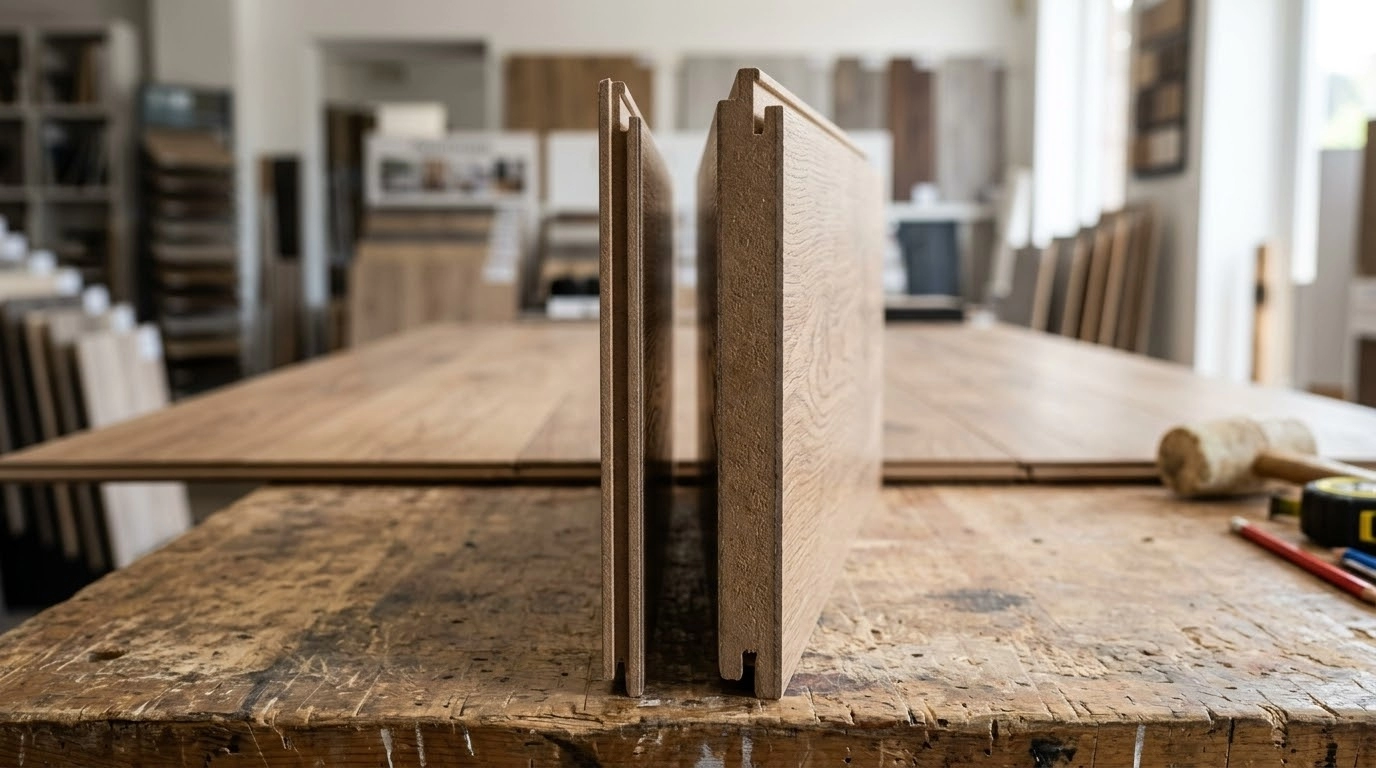
Thickness is one of the easiest flooring specifications for consumers to identify.
Two common options are:
8mm laminate flooring: Often considered for suitable residential areas and projects where cost optimization is important.
12mm laminate flooring: Often provides a more substantial underfoot feel and may be considered when buyers prioritize additional thickness or have higher usage requirements.
However, a 12mm plank is not automatically superior in overall quality to an 8mm plank.
Flooring should also be evaluated based on its core, surface construction, locking system, and other technical characteristics.
Likewise, an imported 8mm floor is not automatically better than a Vietnamese 12mm floor, and the reverse cannot be assumed without comparing actual specifications.
If you are deciding between these two thicknesses, refer to our detailed guide on 8mm vs. 12mm laminate flooring to determine which is more appropriate for your project.
3. Comparing Abrasion Resistance
Flooring surfaces must withstand friction from foot traffic, furniture, chairs, and everyday activities.
This is why abrasion classifications such as AC3, AC4, and AC5 frequently appear when researching laminate flooring.
Avoid assumptions such as:
Imported = highly scratch-resistant.
or:
Budget-friendly = poor scratch resistance.
Instead, check the abrasion classification specified for the exact flooring model you are considering and compare it with the intended environment.
For example, the requirements of a residential bedroom differ from those of a high-traffic commercial space.
Choosing the appropriate performance class can be more important than whether the flooring was manufactured in Vietnam or overseas.

4. Is Imported Laminate Flooring More Water-Resistant?
This is another common misconception.
Imported laminate flooring is not automatically more water-resistant.
Laminate flooring in general should be installed in appropriate environments and should not be exposed to standing water for prolonged periods unless the manufacturer specifically provides water-resistance claims under defined testing conditions.
Moisture and water resistance can depend on factors such as:
-
core construction;
-
core density;
-
edge treatment;
-
locking system;
-
surface layer;
-
manufacturing process;
-
installation conditions;
-
duration of water exposure.
Therefore, if moisture resistance is a priority, ask the supplier for the specifications of the exact product rather than simply asking whether it is imported.

5. Comparing Designs and Wood-Grain Patterns
This criterion is more aesthetic than technical.
Imported flooring may feature colors and designs developed for the aesthetic preferences of particular international markets.
Meanwhile, many Vietnamese flooring collections offer color palettes developed specifically for popular interior styles in Vietnam.
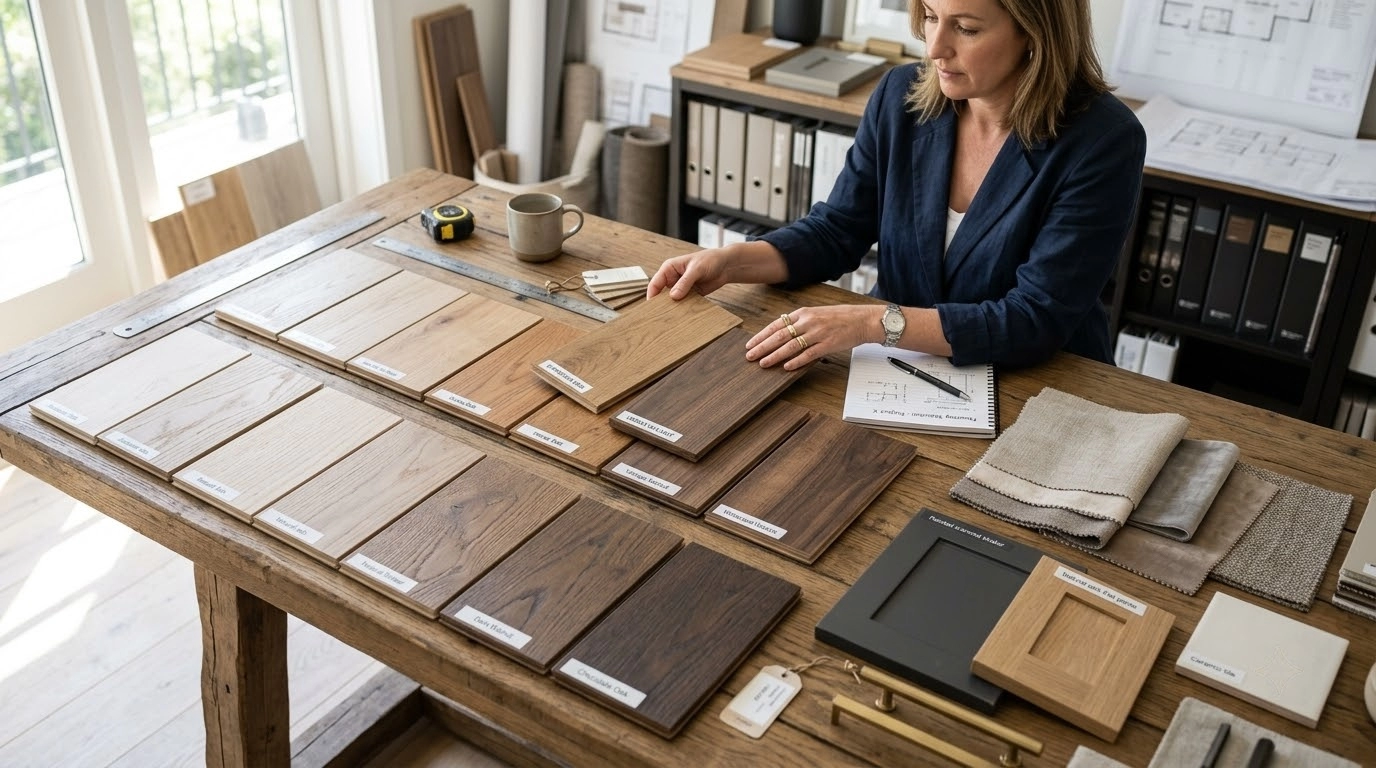
Whenever possible, buyers should place flooring samples inside the actual room where the floor will be installed and observe them under real lighting conditions.
A flooring color displayed on a smartphone screen can look significantly different when placed beside:
-
wall colors;
-
cabinetry;
-
doors;
-
sofas;
-
curtains;
-
natural daylight;
-
artificial lighting.
For this reason, viewing physical samples is generally more useful than choosing a flooring color entirely from online images.
6. Comparing Imported and Vietnamese Laminate Flooring Prices
Competitive pricing is one of the notable advantages of many Vietnamese laminate flooring products.
Imported products may involve additional costs related to logistics, distribution, branding, and currency exchange rates. However, the final price also depends heavily on the product segment.
Therefore, avoid simplistic assumptions such as:
Imported flooring = expensive.
Vietnamese flooring = cheap.
A more meaningful comparison is to select products within similar market segments and calculate the total installed cost.
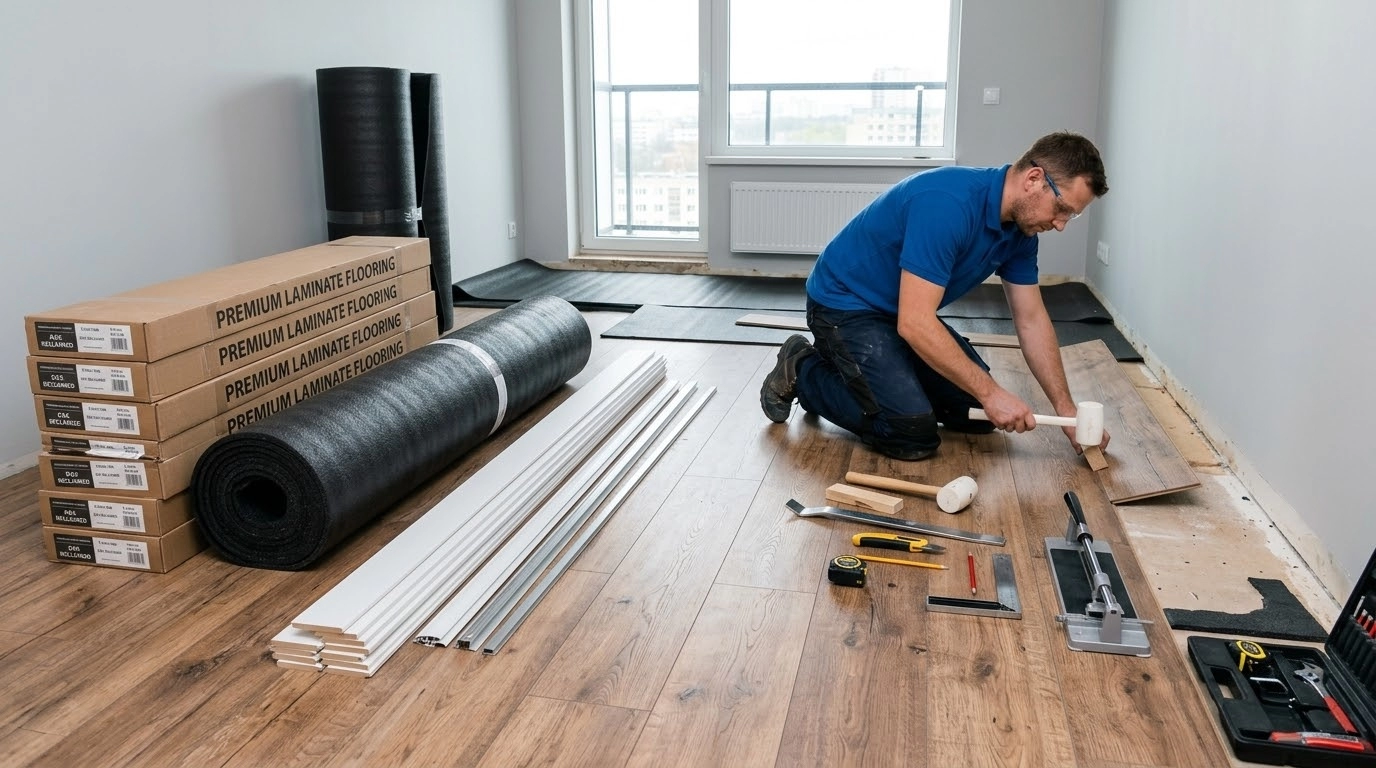
In addition to the flooring itself, the actual project cost may include:
Total Cost = Flooring + Underlayment + Accessories + Labor + Transportation + Material Waste
For example, a flooring product with a lower material price may require additional accessories or installation expenses, meaning it does not necessarily produce the lowest final project cost.
When requesting a quotation, ask for all relevant cost components rather than comparing only the price per square meter of flooring.
7. Product Availability and Future Replacement
This factor is often overlooked during the initial purchase but can become important several years later.
During the life of the flooring, individual planks may need replacement because of:
-
plumbing repairs;
-
interior renovations;
-
partition removal;
-
localized damage;
-
remodeling.
If the original flooring code has been discontinued or is no longer distributed, finding exactly the same color and dimensions can be difficult.
With imported flooring, availability can also depend on import schedules and the distribution status of a particular collection.
Vietnamese products can also be discontinued or replaced with new collections, but brands with stable domestic distribution may offer greater convenience in some situations.
For larger projects, buyers may therefore want to discuss product-code availability and replacement options with the supplier before purchasing.
When Should You Choose Imported Laminate Flooring?
Imported laminate flooring may be worth considering if you:
-
want a particular brand or collection;
-
require specific technical specifications;
-
prefer a distinctive surface finish or design;
-
have an appropriate budget;
-
can clearly verify the product's origin;
-
receive suitable warranty and after-sales support.
The key principle is that the practical value should justify the additional cost.
Do not pay extra simply for the word “imported” without understanding what makes the product different.
When Should You Choose Vietnamese Laminate Flooring?
Vietnamese laminate flooring may be a practical choice if you:
-
want to optimize your budget;
-
need flooring for an apartment or residential property;
-
need to finish multiple rooms;
-
are renovating rental rooms or investment properties;
-
prefer convenient product availability;
-
want easy access to physical samples before purchasing;
-
need a balance between aesthetics, durability, and cost.
For large projects in particular, even a modest difference in price per square meter can create a significant difference in the total budget.
However, “reasonably priced” does not mean choosing the cheapest product available.
A suitable product must still meet the actual usage requirements of the project.
Is Imported Laminate Flooring Always Premium?
No.
This is one of the most important points buyers should understand.
“Imported” describes a product's origin; it does not automatically define its quality level.
Imported laminate flooring can exist across multiple price points and market segments. Likewise, flooring manufactured in Vietnam is available at different quality levels.
Therefore, instead of asking:
Is this flooring imported or made in Vietnam?
Ask:
What type of core does it use?
How thick is it?
What is its abrasion-resistance rating?
What moisture-resistance performance does the manufacturer specify?
What does the warranty actually cover?
Is there documentation verifying its origin?
What is the total installed cost?
These questions provide a much stronger basis for making a purchasing decision than simply looking at the country of manufacture.
7 Criteria for Choosing Laminate Flooring Beyond Country of Origin
When comparing an imported product with a Vietnamese product, use the following checklist.
1. Check the Core
Review the type of core, its density, dimensional stability, and moisture resistance.
2. Check the Thickness
Choose 8mm or 12mm laminate flooring according to actual requirements rather than assuming that thicker is always better.
3. Check the Surface
Review the abrasion-resistance specifications and compare them with the expected traffic level of the project.
4. Check the Locking System
The locking system should be secure, appropriate for the flooring system, and installed correctly.
5. Verify the Origin
Especially when a product is marketed as imported, request clear information about its country of origin.
6. Review the Warranty
Read the warranty conditions rather than looking only at the advertised number of warranty years.
7. Calculate the Total Budget
Compare the final installed cost rather than focusing only on the material price per square meter.
Which Laminate Flooring Is Suitable for Different Types of Projects?
The intended environment is one of the most important factors when choosing flooring.

Townhouses and Apartments
Both Vietnamese and imported laminate flooring can be suitable.
Prioritize products whose specifications match household traffic levels, interior colors, and the overall project budget.
Bedrooms
Bedrooms generally experience less foot traffic than living rooms.
Buyers can therefore focus more on comfort, color, budget, and appropriate specifications rather than automatically selecting a premium product.
Condominiums
In addition to plank quality, pay attention to subfloor preparation, underlayment, installation techniques, and transitions between different surfaces.
The choice between 8mm and 12mm flooring should be based on the specific requirements of the project.
Offices
Office environments may experience more foot traffic than residential spaces.
Abrasion resistance and suitability for commercial use should therefore be evaluated carefully.
Rental Rooms and Rental Apartments
The goal is usually to balance:
initial investment + durability + maintenance + aesthetics.
This is where reasonably priced laminate flooring can offer strong value when the correct specifications are selected.
Homestays
In addition to durability, design and visual appeal in photography may also be important.
The most expensive flooring is not always necessary. A floor color that complements the interior concept can sometimes create greater visual impact.
Is Budget-Friendly Vietnamese Laminate Flooring Worth Buying?
It can be, provided the product meets the intended usage requirements and offers clear technical information.
A common mistake is assuming:
low price = low quality.
Product prices can also be influenced by branding, distribution systems, transportation costs, marketing, country of origin, and market positioning.
Instead of searching for the cheapest laminate flooring, buyers should look for the product offering the most reasonable cost over its expected service life.
For example, installing an unnecessarily premium product in a rental apartment may not be economically justified. On the other hand, selecting flooring that is inadequate for the expected level of use may increase future repair costs.
This is why selecting flooring according to actual requirements is more important than choosing based on price alone.
Common Mistakes When Comparing Imported and Vietnamese Flooring
Looking only at country of origin: Manufacturing location cannot replace technical specifications.
Looking only at thickness: A 12mm plank is not automatically a higher-quality product.
Looking only at price: The lowest purchase price does not necessarily result in the lowest total cost.
Believing every waterproof claim: Check the manufacturer's stated specifications, test conditions, and limitations.
Not viewing physical samples: Flooring colors on a screen can differ from how they appear in the actual room.
Ignoring accessory costs: Skirting, profiles, underlayment, transportation, and labor can significantly affect the total budget.
Failing to verify imported products: If imported origin is one reason you are paying a premium, that information should be verifiable.
So, Should You Buy Imported or Vietnamese Laminate Flooring?
If two products are placed side by side without knowing their specifications, it is impossible to conclude that the imported or Vietnamese product is better.
A sensible decision should be based on four factors:
Usage Requirements → Product Specifications → Budget → After-Sales Service
If you prioritize a specific brand, design, or set of technical standards and your budget allows, imported laminate flooring may be appropriate.
If you want to balance price, design, and practical requirements, many Vietnamese laminate flooring products are also worth considering.
Most importantly, compare products within the same market segment rather than comparing a low-cost Vietnamese product with a premium imported product and then drawing conclusions based solely on their countries of origin.
Tips for Inspecting Laminate Flooring Before Buying
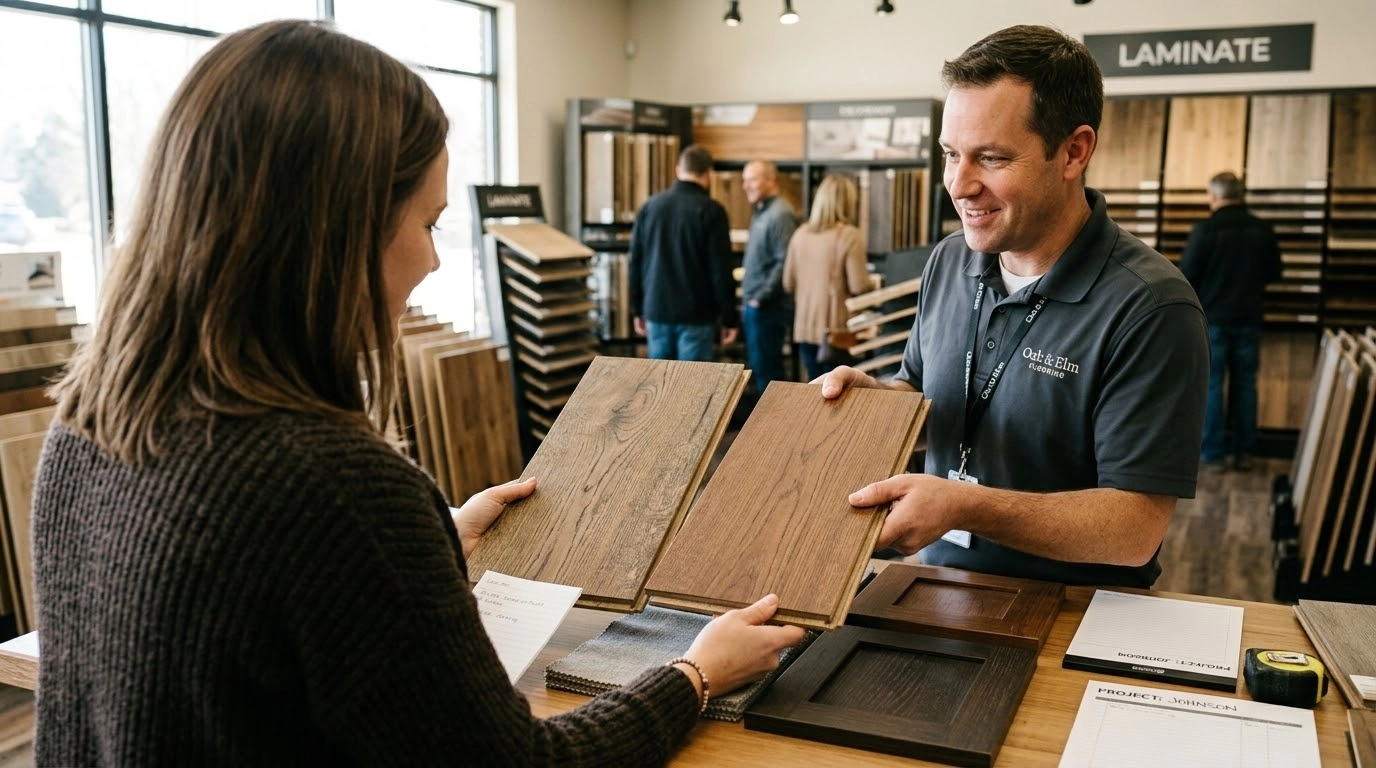
Whenever possible, inspect physical flooring samples before placing an order.
When examining a sample, check:
-
color under natural daylight;
-
surface texture and realism of the wood grain;
-
plank edges;
-
locking system;
-
rigidity of the plank;
-
information printed on the back;
-
packaging specifications;
-
warranty information;
-
origin and supporting product documentation.
If you are flooring an entire apartment or a large project, consider bringing samples of your cabinetry, doors, or other interior finishes to compare colors directly.
Do not choose flooring based solely on an attractive online image.
FAQ – Frequently Asked Questions
Is imported laminate flooring better than Vietnamese laminate flooring?
Not necessarily. Quality should be evaluated based on the specific product's core, thickness, surface, moisture resistance, locking system, technical standards, and price rather than its country of origin alone.
Is Vietnamese laminate flooring good?
Vietnamese laminate flooring is available across multiple market segments. Some products can be well suited to residential and appropriate commercial applications. Evaluate individual products according to their specifications rather than manufacturing location alone.
Is imported laminate flooring waterproof?
Water and moisture resistance vary by product. Imported origin should not automatically be interpreted as waterproof performance.
Is 8mm or 12mm laminate flooring better?
12mm flooring generally feels thicker and more substantial underfoot, but thickness alone does not determine overall quality. The core, surface, locking system, and intended use should also be considered.
Is AC3, AC4, or AC5 better?
Higher classifications generally indicate greater abrasion resistance within the applicable rating system. However, flooring should be selected according to its intended environment rather than automatically choosing the highest available rating.
Should I buy budget laminate flooring?
It can be a good choice if the product has clear origins, appropriate specifications, and meets the project's requirements. Avoid choosing a product solely because it has the lowest price.
How can I verify genuine imported laminate flooring?
Check the manufacturer information, product labeling, packaging, and appropriate documentation provided by the distributor to verify the product's origin.
Should I view flooring samples before buying?
Yes. Physical samples allow you to evaluate color, wood grain, surface texture, and compatibility with your interior more accurately than online images alone.
Conclusion
There is no universal answer to the question of whether imported or Vietnamese laminate flooring is better.
Country of origin is useful information, but it should never become the only criterion in a purchasing decision.
A worthwhile flooring product should achieve the right balance between:
appropriate quality – suitable specifications – aesthetics – budget – service.
If you are considering laminate flooring for an apartment, townhouse, rental property, office, or commercial project, you can visit Khosango to view samples and compare different flooring options according to your actual requirements.
Instead of beginning with the question “Vietnamese or imported?”, start with three pieces of information:
What is the total area? What type of space will the flooring be used in? What is your expected budget?
From there, it becomes much easier to determine the appropriate thickness, product segment, and flooring line—while avoiding unnecessary spending on features your project does not actually require.





Vui lòng đăng nhập để bình luận bài viết này.