





9 Outdoor Decking Installation Mistakes That Cause Early Damage
Outdoor decking is widely used for gardens, balconies, rooftops, swimming pool surrounds, patios, and outdoor walkways. It creates a clean, elegant, and natural-looking surface while making exterior spaces more comfortable and visually appealing.
Outdoor decking is widely used for gardens, balconies, rooftops, swimming pool surrounds, patios, and outdoor walkways. It creates a clean, elegant, and natural-looking surface while making exterior spaces more comfortable and visually appealing.
However, not every outdoor decking project performs as well as expected. In many cases, premature deterioration is caused not by the decking material itself, but by incorrect installation.
When installation standards are ignored, the deck may develop serious problems such as warped boards, uneven surfaces, water pooling underneath, unstable framing, or WPC decking boards coming loose after only a short period of use. These issues affect both appearance and safety. They may also result in expensive repairs, removal, and complete reinstallation.
Therefore, whether you are planning a new project or inspecting an existing deck, understanding the most common outdoor decking installation mistakes is essential. The following nine errors are frequently found in real projects, but they can be prevented with proper planning and professional installation.
1. Failing to Prepare the Subfloor Properly
One of the most serious outdoor decking installation mistakes is installing the decking directly over an unprepared surface.
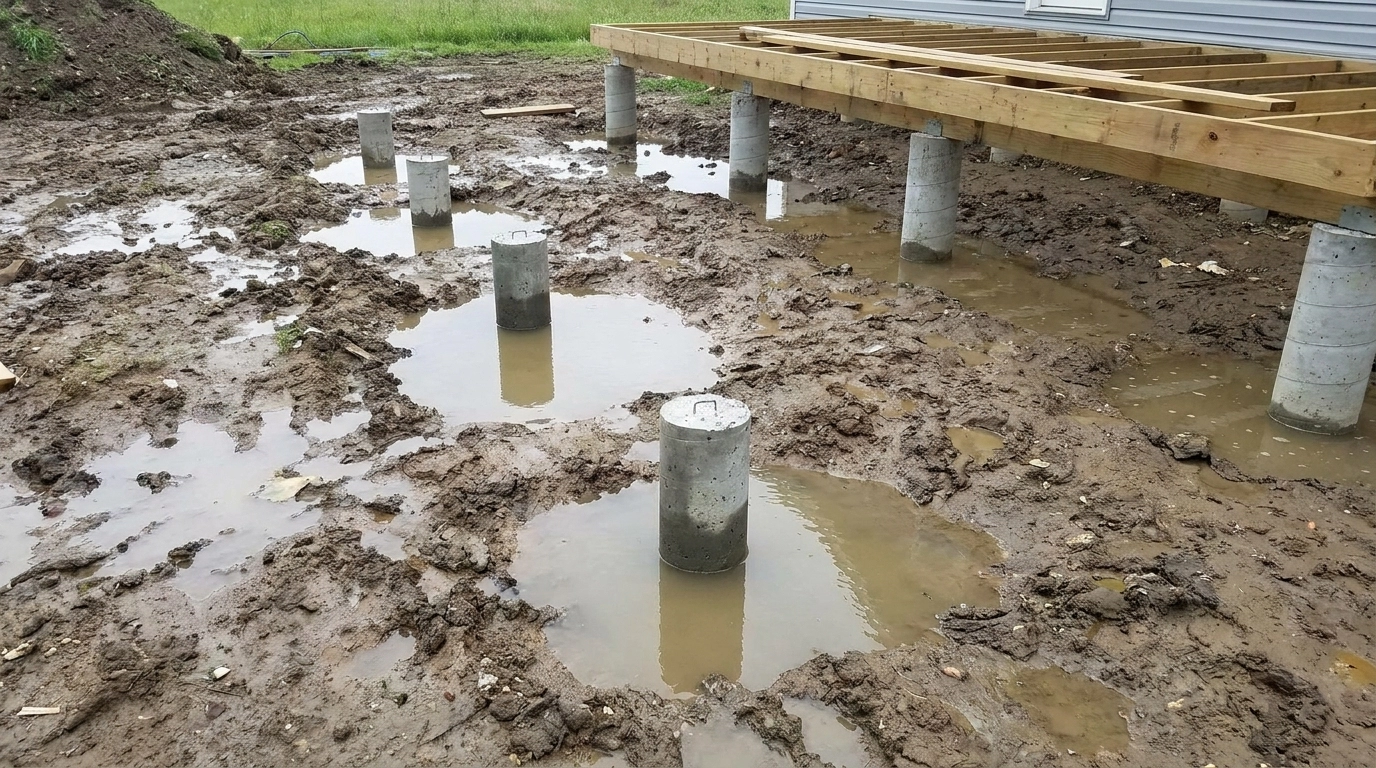
Some contractors begin installation without checking whether the concrete base is level, stable, waterproof, or properly sloped. If the surface is uneven, the supporting joists will not sit firmly. As a result, the finished deck may feel unstable, move underfoot, or produce noise when people walk across it.
Low areas in the subfloor can also trap rainwater. Over time, water pooling beneath the decking creates excess moisture, encourages mold and algae growth, and may shorten the lifespan of the supporting structure.
Before installation begins, the entire surface should be cleaned thoroughly. Contractors must inspect the elevation, identify low points, repair cracks, and create a suitable drainage slope. Waterproofing should also be checked, especially on balconies and rooftops.
Proper subfloor preparation may seem like a simple step, but it has a major influence on the durability of the entire project.
2. Installing the Supporting Joists Too Far Apart
The supporting frame acts as the structural foundation of an outdoor deck. It distributes weight, stabilizes the boards, and prevents excessive movement.
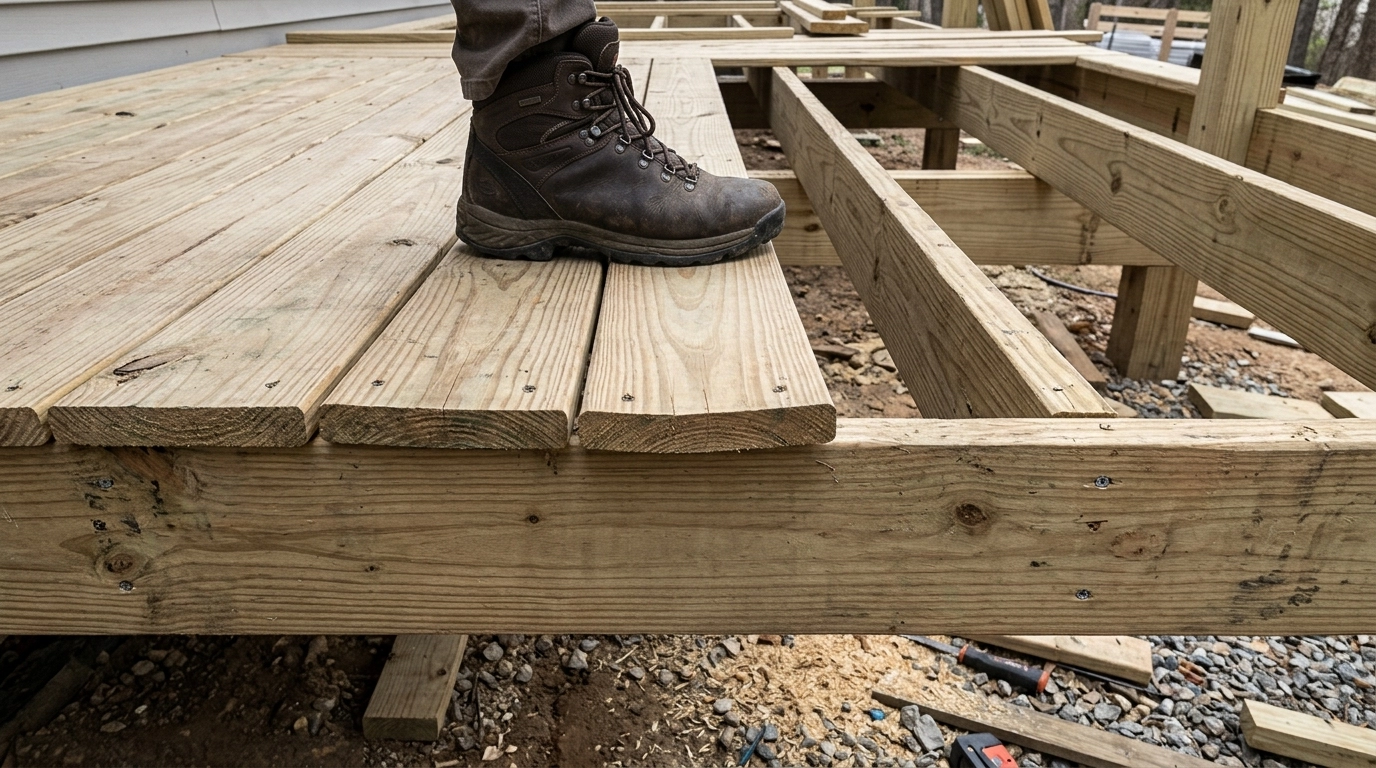
When the distance between joists is too wide, the decking boards do not receive enough support. They may bend, vibrate, sag, or feel soft when walked on. In areas exposed to heavy furniture or frequent foot traffic, the problem can become more serious.
Some contractors reduce the number of joists to lower material costs. However, this short-term saving often leads to higher repair costs later. Insufficient support may also contribute to warped outdoor decking or cracked boards.
The correct joist spacing depends on the board profile, board thickness, material composition, installation direction, and expected load. Solid WPC boards, hollow boards, and co-extruded decking may have different technical requirements.
For this reason, contractors should always follow the manufacturer’s installation recommendations instead of applying the same spacing to every product.
3. Not Leaving Adequate Expansion Gaps
Outdoor decking is constantly exposed to temperature changes, rain, sunlight, and humidity. Even composite decking expands and contracts when environmental conditions change.
If boards are installed too tightly, they do not have enough space to expand during hot weather. Pressure then builds between adjacent boards or at the ends of the decking.
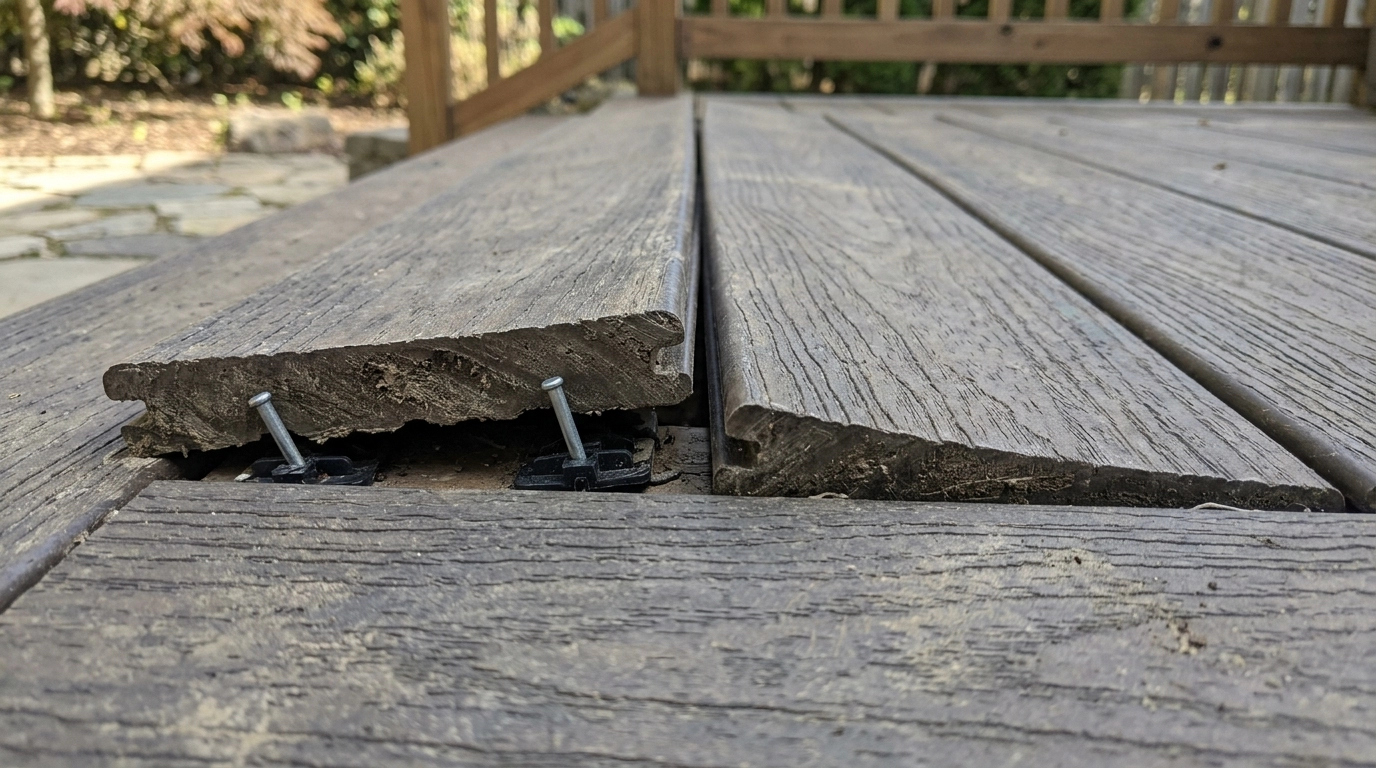
This may cause the surface to rise, buckle, warp, shift, or break away from its fastening system. In many cases, WPC decking boards come loose because the installer failed to leave sufficient expansion gaps.
Expansion gaps are required between board ends, around walls, beside columns, near steps, and around other fixed structures. The exact gap should be based on the manufacturer’s technical instructions, board length, installation temperature, and local climate.
Installers should also avoid forcing boards into tight spaces. A deck may look neat immediately after installation, but an overly tight layout can cause serious damage when the material expands.
4. Ignoring the Direction of Water Drainage
A high-quality outdoor deck must do more than look attractive. It must also allow rainwater and cleaning water to drain efficiently.
If boards, joists, or finishing trims are installed in the wrong direction, they may block the natural flow of water. Rainwater can then collect beneath the decking, around columns, along walls, or in concealed corners.
Water pooling on decking increases the risk of slippery surfaces, stains, unpleasant odors, algae growth, and mosquito breeding. Constant moisture may also damage metal fasteners and weaken the supporting structure.
Before laying the boards, contractors should identify the main drainage direction. The frame and boards must be arranged so that water can move freely toward drainage outlets.
Rooftops, balconies, pool decks, and garden patios should have an appropriate slope. Drainage channels must remain accessible and should never be completely covered by joists or decking boards.
After installation, the drainage system should be tested with water before the project is accepted.
5. Using Low-Quality or Incompatible Accessories
Decking boards are only one part of an outdoor flooring system. Clips, screws, joists, edge trims, brackets, and adjustable supports also affect the deck’s stability.
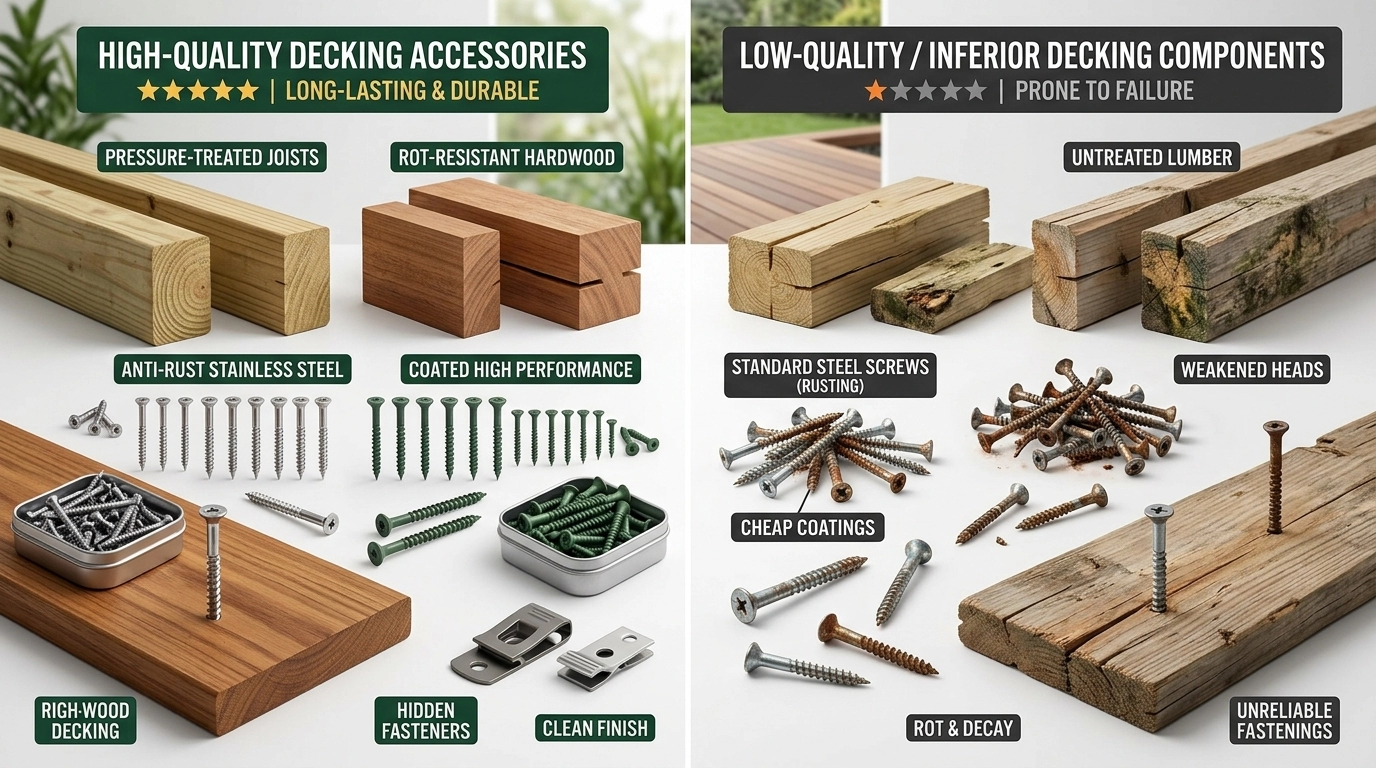
Low-quality clips may crack or fail to hold boards securely. Ordinary screws may rust after prolonged exposure to rain. Incompatible fasteners may also create uneven gaps or damage the edges of WPC boards.
As these accessories deteriorate, the deck may begin to move, rattle, or separate from the supporting frame. Loose or broken fasteners are among the most common reasons WPC decking boards come loose.
Contractors should use accessories that are compatible with the selected decking system. Stainless steel or corrosion-resistant screws are recommended for exterior environments, especially near swimming pools or coastal areas.
Using a complete, synchronized installation system improves structural stability and makes future maintenance easier.
6. Installing Decking Over a Poorly Waterproofed Surface
Waterproofing is essential for rooftop terraces, balconies, pool surrounds, and other areas located above occupied rooms.
Unfortunately, some projects focus only on the visible decking surface and ignore the condition of the waterproofing layer underneath. If the old waterproofing membrane is damaged, rainwater may penetrate the structure even when the decking itself remains unaffected.
Moisture trapped below the deck can cause mold, stains, unpleasant odors, concrete deterioration, and water leakage into the rooms below. An unstable or damaged substrate may also contribute to warped outdoor decking.
Before installing the frame, contractors should inspect the waterproofing system carefully. Existing cracks, weak joints, or damaged drainage areas must be repaired first.
When fastening the supporting structure, installers should avoid drilling through the waterproof membrane unnecessarily. Suitable raised supports or non-invasive fixing methods may be required for sensitive rooftop applications.
Outdoor decking should never be used to hide an existing waterproofing problem.
7. Cutting and Joining Boards Carelessly
Poor cutting and inaccurate board alignment can reduce both the visual quality and the durability of an outdoor deck.
Common problems include uneven board ends, inconsistent gaps, badly aligned joints, exposed cut edges, rough corners, and poorly finished borders. These errors make the completed project look unprofessional.
In addition, badly positioned joints may allow more water and debris to enter the supporting system. Unsupported board ends can move, crack, or lift over time.
Before cutting, installers should measure the area carefully and plan the board layout. Short pieces should not be placed randomly, especially in high-traffic locations.
Board ends must be fully supported by the framing system. Corners, steps, access covers, columns, and edge areas should be finished with suitable trims or carefully cut boards.
Precise cutting requires more time, but it creates a cleaner surface and reduces the risk of future movement.
8. Hiring an Inexperienced Installation Team
Outdoor decking installation requires different skills from indoor flooring installation. The installer must understand drainage, expansion, framing, waterproofing, fastening systems, and outdoor environmental conditions.
An inexperienced team may complete the visible surface quickly while ignoring the technical structure underneath. Problems often appear later in the form of loose boards, water pooling, uneven gaps, unstable sections, or warped outdoor decking.
Swimming pool decks, rooftop terraces, and commercial walkways require even greater technical control. These areas are exposed to high moisture, strong sunlight, frequent movement, or heavier loads.
Before choosing a contractor, property owners should review completed projects, ask about the installation process, and confirm the warranty policy.
A professional team should be able to explain the proposed joist spacing, drainage plan, expansion gaps, fastening system, accessories, and maintenance requirements.
Choosing the lowest installation price without checking technical capability may result in expensive repairs later.
9. Skipping the Final Inspection and Acceptance Process
Many people assume that the project is complete as soon as the last board is installed. However, final inspection is an essential part of professional outdoor decking installation.
Without proper inspection, small installation defects may remain hidden. Over time, these minor issues can develop into serious problems.
The inspection should include the overall flatness of the deck, board alignment, surface stability, expansion gaps, finishing details, edge trims, drainage performance, and fastening points.
Installers should walk across the entire surface to identify soft, unstable, or noisy sections. Water should also be applied to verify that it flows toward the correct drainage points without collecting underneath or on top of the deck.
Any defective boards, loose clips, exposed screws, sharp edges, or uneven joints should be corrected before the project is handed over.
Early detection makes repairs faster, easier, and less expensive.
How to Avoid Outdoor Decking Installation Mistakes
A durable outdoor deck depends on more than choosing attractive boards. Successful performance requires a complete installation system.
First, the decking product must suit the application. Pool surrounds, rooftop terraces, balconies, public walkways, and garden areas may require different board structures and surface finishes.
Second, the subfloor must be stable, clean, waterproof, and properly sloped. The supporting frame should use suitable materials and follow the correct spacing.
Third, installers must leave sufficient expansion gaps and maintain consistent spacing between boards. Drainage channels should remain open so that water can escape easily.
Finally, the project should use corrosion-resistant accessories and be completed by an experienced installation team. A detailed final inspection should be carried out before the deck is placed into service.
Property owners should ask the contractor about:
- Joist spacing
- Expansion gaps
- Drainage direction
- Waterproofing protection
- Fastener materials
- Board-end support
- Installation warranty
- Maintenance requirements
Understanding these basic factors makes it easier to recognize and prevent common outdoor decking installation mistakes.

Conclusion
A long-lasting outdoor deck requires both quality materials and correct installation. Even premium WPC decking may deteriorate early when the subfloor, framing system, expansion gaps, drainage, or accessories are handled incorrectly.
Small installation errors can eventually cause warped outdoor decking, water pooling, unstable surfaces, or WPC decking boards coming loose.
By understanding the nine mistakes discussed above, property owners can supervise projects more effectively and make better decisions when selecting an installation contractor.
Whether the decking is installed around a swimming pool, on a balcony, across a rooftop terrace, or through a garden, professional installation will improve safety, appearance, and long-term performance. It will also help reduce maintenance costs and prevent unnecessary removal or replacement in the future.
Purchase and Installation of Outdoor Decking at Kho Sàn Gỗ
Kho Sàn Gỗ supplies a wide range of outdoor WPC decking products suitable for gardens, balconies, rooftop terraces, swimming pools, restaurants, cafés, and resorts.
Customers receive full support with site inspection, board profile selection, subframe design, and accurate material estimates. With a commitment to high-quality service, Kho Sàn Gỗ aims to deliver complete outdoor finishing solutions that are visually appealing, durable, and suitable for each project.
Complimentary Services
– On-site inspection, floor measurement, cost estimation, and quotation.
– 24/7 at-home sample consultation, available from 7:00 AM to 9:00 PM, Monday through Sunday.
– Product samples provided for quality inspection, together with C.O. and C.Q. documentation.
Toll-Free Number: 1800 6121
Hotline: 0913 8888 01 / 0913 8888 02 (Zalo/Viber)
Frequently Asked Questions
1. Why Does Newly Installed Outdoor Decking Warp?
Warping is often caused by insufficient expansion gaps, excessive joist spacing, an uneven subfloor, poor drainage, or unsupported board ends. Incorrect fastening may also create pressure that causes boards to bend or lift.
2. Is Water Pooling on Outdoor Decking Dangerous?
Yes. Standing water can create slippery surfaces, stains, algae, unpleasant odors, and accelerated corrosion of metal accessories. Water trapped beneath the deck may also affect the supporting frame and waterproofing system.
3. Can Loose WPC Decking Boards Be Repaired?
In many cases, they can be repaired if the problem is detected early. The contractor should inspect the clips, screws, expansion gaps, joists, and board condition. Damaged accessories or boards may need to be replaced.
4. What Should Be Checked Before Installing Outdoor Decking?
The contractor should inspect the subfloor, drainage slope, waterproofing, installation height, joist spacing, board direction, expansion gaps, accessories, and expected load. These factors directly affect the deck’s long-term durability.





Vui lòng đăng nhập để bình luận bài viết này.