




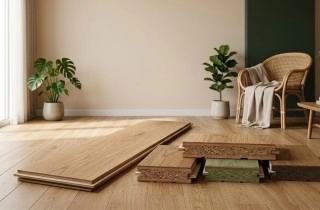
Tư Vấn Chọn Sàn & Thi Công Đúng Kỹ Thuật
Chọn sàn cho một công trình nghe thì đơn giản, nhưng làm đúng lại là cả một quá trình. Một loại sàn đẹp trên catalogue chưa chắc đã phù hợp với nền nhà, khí hậu, mức sử dụng hay ngân sách thực tế. Và cũng như vậy, một tấm sàn tốt nhưng thi công sai kỹ thuật thì vẫn có thể phát sinh tiếng kêu, hở hèm, cong mép, phồng rộp hoặc xuống cấp sớm.
Tư Vấn Chọn Sàn & Thi Công Đúng Kỹ Thuật
Chọn sàn cho một công trình nghe thì đơn giản, nhưng làm đúng lại là cả một quá trình. Một loại sàn đẹp trên catalogue chưa chắc đã phù hợp với nền nhà, khí hậu, mức sử dụng hay ngân sách thực tế. Và cũng như vậy, một tấm sàn tốt nhưng thi công sai kỹ thuật thì vẫn có thể phát sinh tiếng kêu, hở hèm, cong mép, phồng rộp hoặc xuống cấp sớm.
Vì thế, khi nói đến tư vấn chọn sàn & thi công đúng kỹ thuật, điều quan trọng không chỉ là chọn vật liệu đẹp, mà còn là chọn đúng theo nhu cầu sử dụng, đúng theo môi trường lắp đặt và đúng theo tiêu chuẩn thi công. Đây là phần nền tảng quyết định độ bền, tính thẩm mỹ và trải nghiệm sử dụng lâu dài của không gian.
1. Vì sao cần tư vấn chọn sàn trước khi thi công?
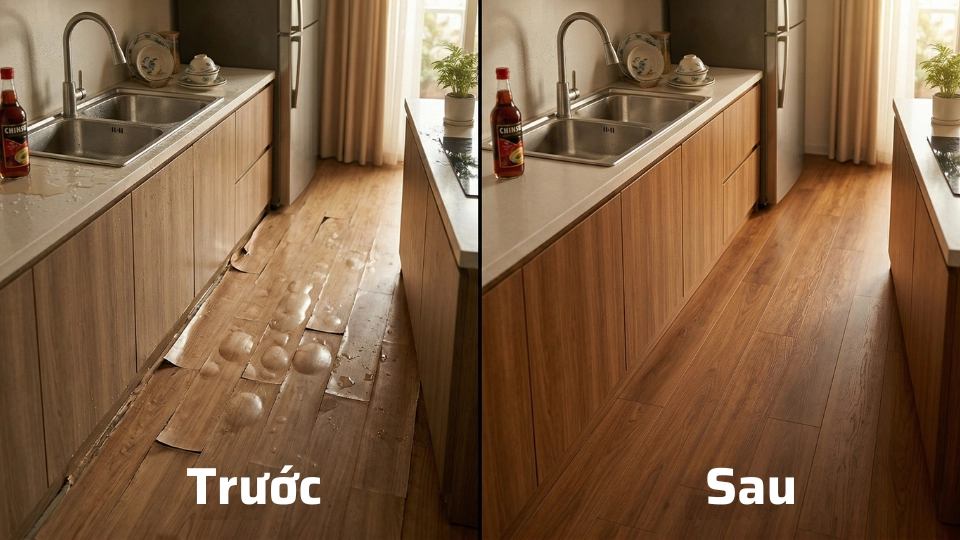
Rất nhiều công trình gặp lỗi không phải vì sàn kém chất lượng, mà vì chọn sai ngay từ đầu. Có người chọn sàn quá rẻ cho khu vực sử dụng nhiều. Có người chọn sàn gỗ ở nơi ẩm thấp, gần nước. Cũng có người chọn màu quá tối khiến căn phòng bí và nhỏ hơn thực tế.
Tư vấn đúng giúp giải quyết 3 vấn đề lớn.
Thứ nhất là phù hợp công năng. Phòng khách, phòng ngủ, showroom, spa, văn phòng hay quán cafe đều có yêu cầu khác nhau. Không thể dùng cùng một loại sàn cho mọi không gian.
Thứ hai là phù hợp điều kiện thực tế. Nền nhà có phẳng không, độ ẩm thế nào, công trình ở tầng trệt hay tầng cao, có ánh nắng chiếu trực tiếp hay không… tất cả đều ảnh hưởng đến cách chọn sàn.
Thứ ba là tối ưu chi phí. Một lựa chọn đúng giúp tránh sửa chữa về sau, đồng thời không phải chi quá nhiều cho tính năng không cần thiết.
2. Các yếu tố cần xem xét khi chọn sàn
Chọn sàn không nên chỉ nhìn màu sắc. Người có kinh nghiệm sẽ xem theo nhiều lớp, từ kỹ thuật đến cảm giác sử dụng.
Loại công trình
Nhà ở gia đình, căn hộ chung cư, nhà phố, văn phòng hay mặt bằng kinh doanh đều có đặc thù riêng. Với nhà ở, yếu tố thẩm mỹ và cảm giác đi lại thường được ưu tiên. Với mặt bằng kinh doanh, độ bền, khả năng chịu mài mòn và tốc độ thi công lại quan trọng hơn.

Mức độ ẩm của khu vực
Nếu khu vực có độ ẩm cao, gần cửa ra vào, tầng trệt hoặc thường xuyên tiếp xúc nước, cần cân nhắc kỹ giữa sàn gỗ và sàn nhựa. Không phải loại nào cũng chịu ẩm giống nhau. Đây là nguyên nhân rất phổ biến dẫn đến phồng sàn hoặc hở mép.
Tần suất sử dụng
Một phòng ngủ ít người đi lại sẽ khác hoàn toàn với phòng khách, hành lang hoặc showroom có mật độ di chuyển cao. Mức độ sử dụng quyết định yêu cầu về độ cứng, chống trầy và tuổi thọ bề mặt.
Phong cách nội thất
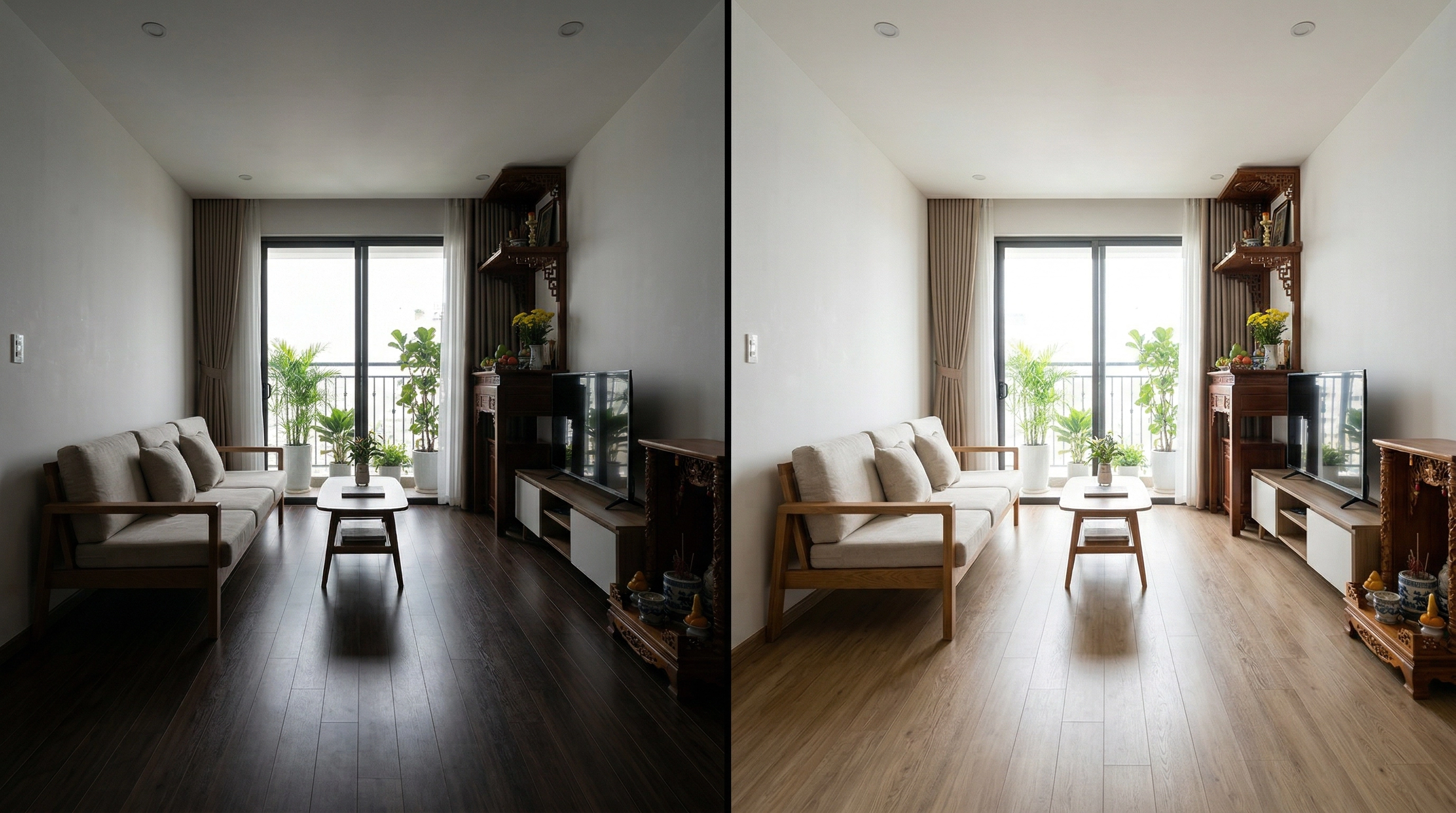
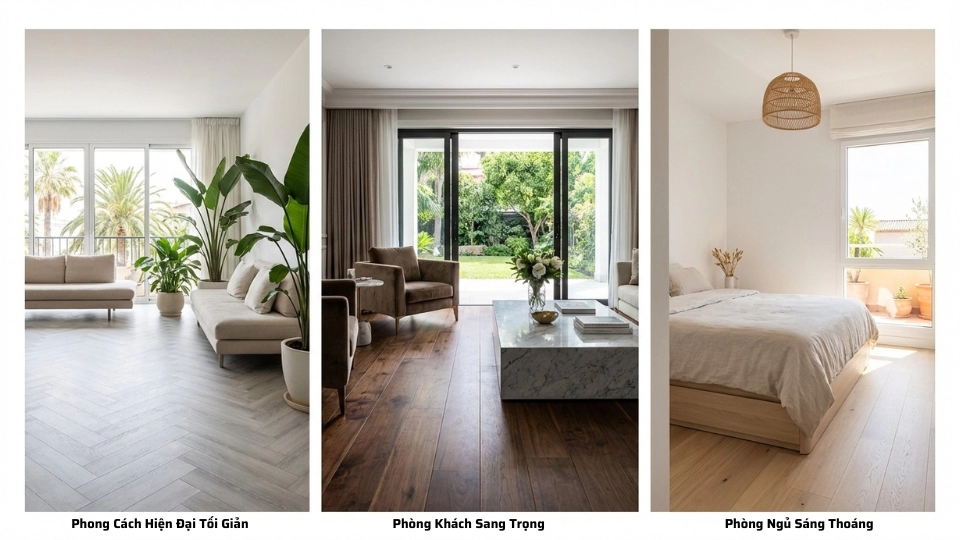
Sàn phải đi cùng tổng thể. Một không gian hiện đại thường hợp với màu trung tính, vân gỗ nhẹ. Không gian sang trọng có thể hợp với màu trầm, trong khi các không gian nhỏ nên ưu tiên màu sáng để tạo cảm giác rộng hơn.
Ngân sách đầu tư
Không phải cứ đắt là tốt nhất. Điều quan trọng là đúng với mục tiêu sử dụng. Nếu cần một giải pháp bền, đẹp, thi công nhanh và dễ thay thế, có thể chọn sàn nhựa. Nếu cần cảm giác ấm áp, sang và gần gũi như gỗ thật, sàn gỗ công nghiệp là lựa chọn đáng cân nhắc.
3. Nên chọn sàn gỗ hay sàn nhựa?
Đây là câu hỏi rất thường gặp. Câu trả lời không nằm ở việc loại nào “hơn” loại nào, mà là loại nào hợp hơn với công trình.
Khi nào nên chọn sàn gỗ công nghiệp?
Sàn gỗ công nghiệp phù hợp khi bạn ưu tiên:
-
vẻ đẹp tự nhiên,
-
cảm giác đi đầm chân,
-
tính sang trọng,
-
không gian sống lâu dài,
-
phòng khách, phòng ngủ, khu vực khô ráo.
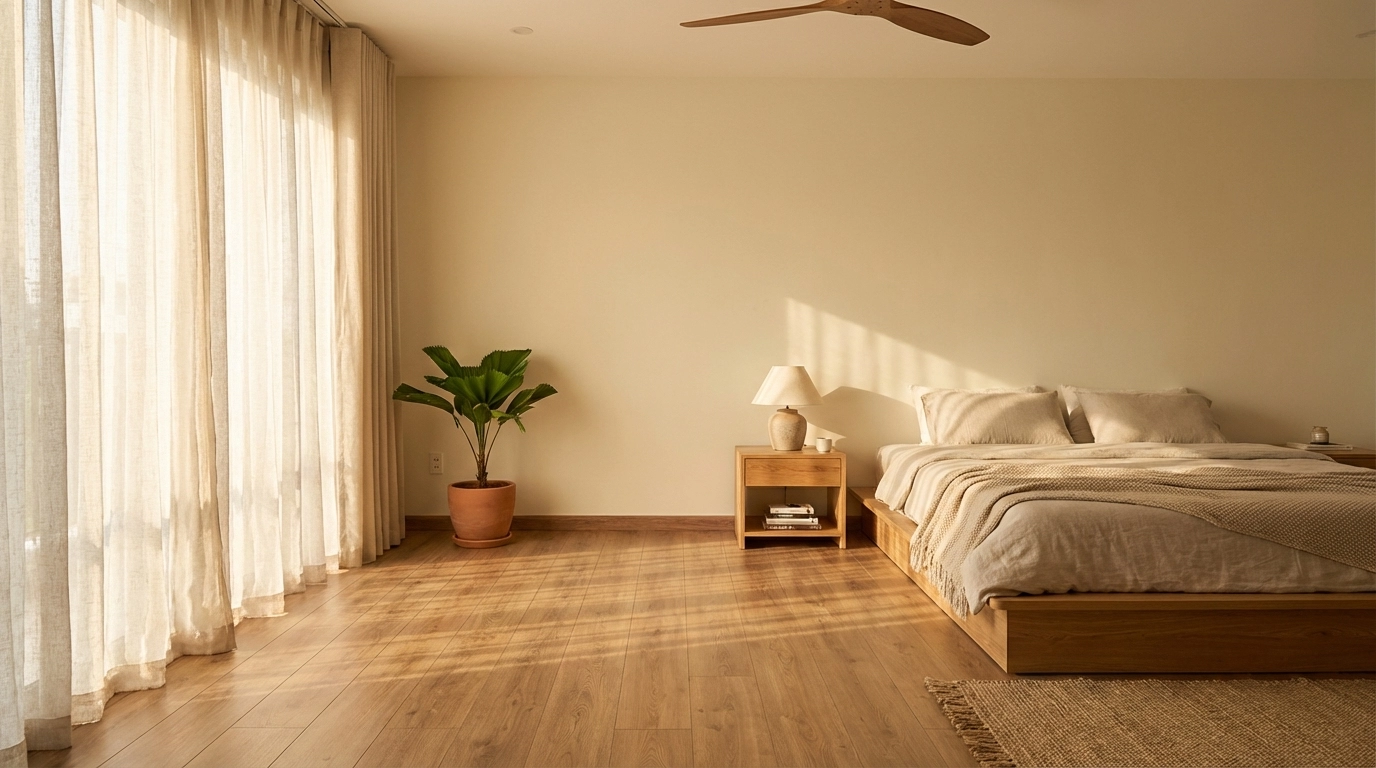
Sàn gỗ thường tạo cảm giác ấm áp, tinh tế và có chiều sâu hơn. Nếu công trình cần nâng tầm thẩm mỹ, đây là một lựa chọn mạnh.
Khi nào nên chọn sàn nhựa?
Sàn nhựa phù hợp khi bạn cần:
-
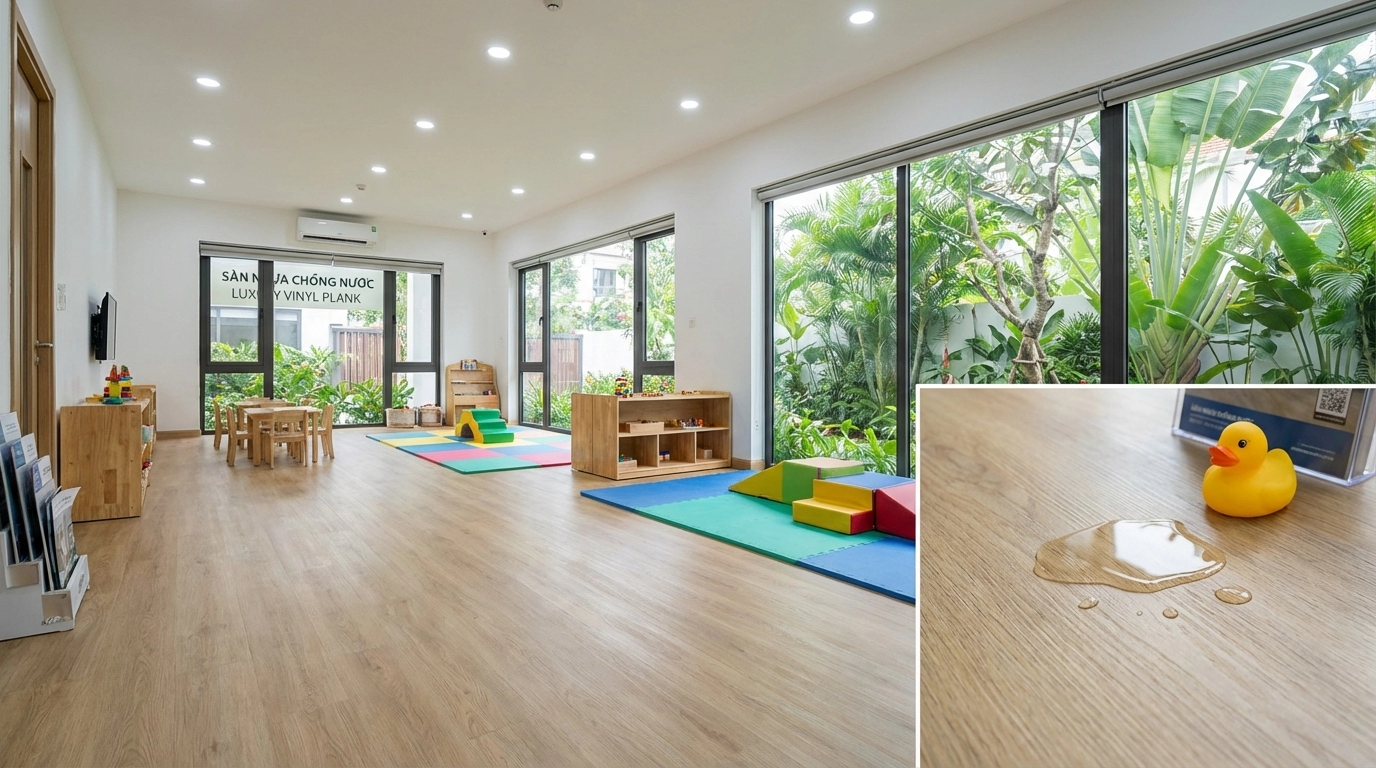
khả năng chống nước tốt,
-
thi công linh hoạt,
-
giảm tiếng ồn,
-
khu vực ẩm,
-
công trình thương mại, spa, nhà trẻ, tầng trệt.
Sàn nhựa có lợi thế lớn về sự thực dụng. Với những nơi rủi ro ẩm cao hoặc cần vệ sinh thường xuyên, đây là giải pháp an toàn.
4. Các tiêu chí kỹ thuật khi chọn sàn
Một lựa chọn đúng phải nhìn vào thông số kỹ thuật, không chỉ nhìn mẫu.
Độ dày và cấu trúc ván
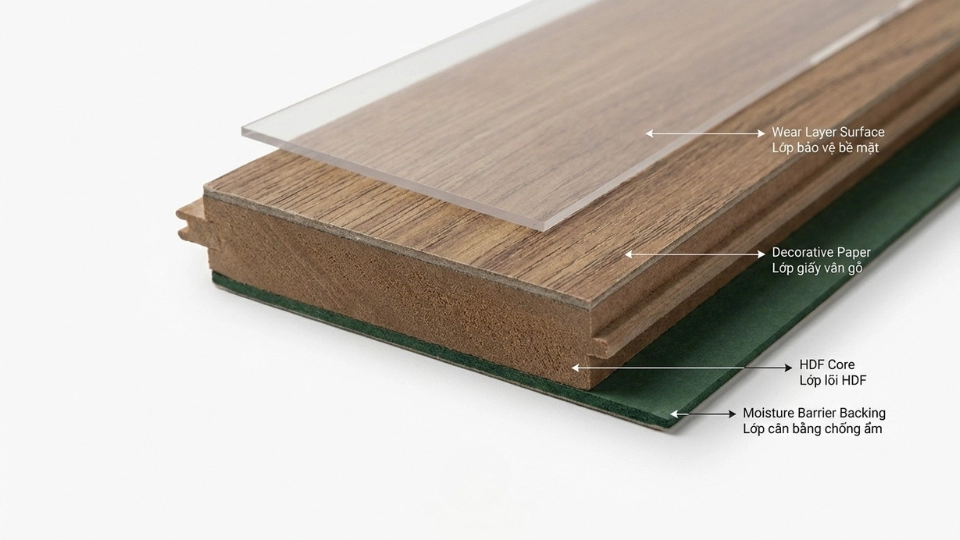
Độ dày ảnh hưởng đến độ ổn định và cảm giác sử dụng. Ván quá mỏng có thể giảm chi phí ban đầu, nhưng độ bền và độ chắc chân thường không bằng dòng dày hơn.
Cốt nền
Với sàn gỗ công nghiệp, cốt HDF chất lượng tốt sẽ giúp sàn ổn định hơn, chịu lực tốt hơn và giảm nguy cơ hư hỏng khi môi trường thay đổi.
Lớp bề mặt
Lớp bề mặt quyết định khả năng chống trầy, chống mài mòn và giữ vẻ đẹp lâu dài. Đây là yếu tố rất quan trọng ở khu vực đi lại nhiều.
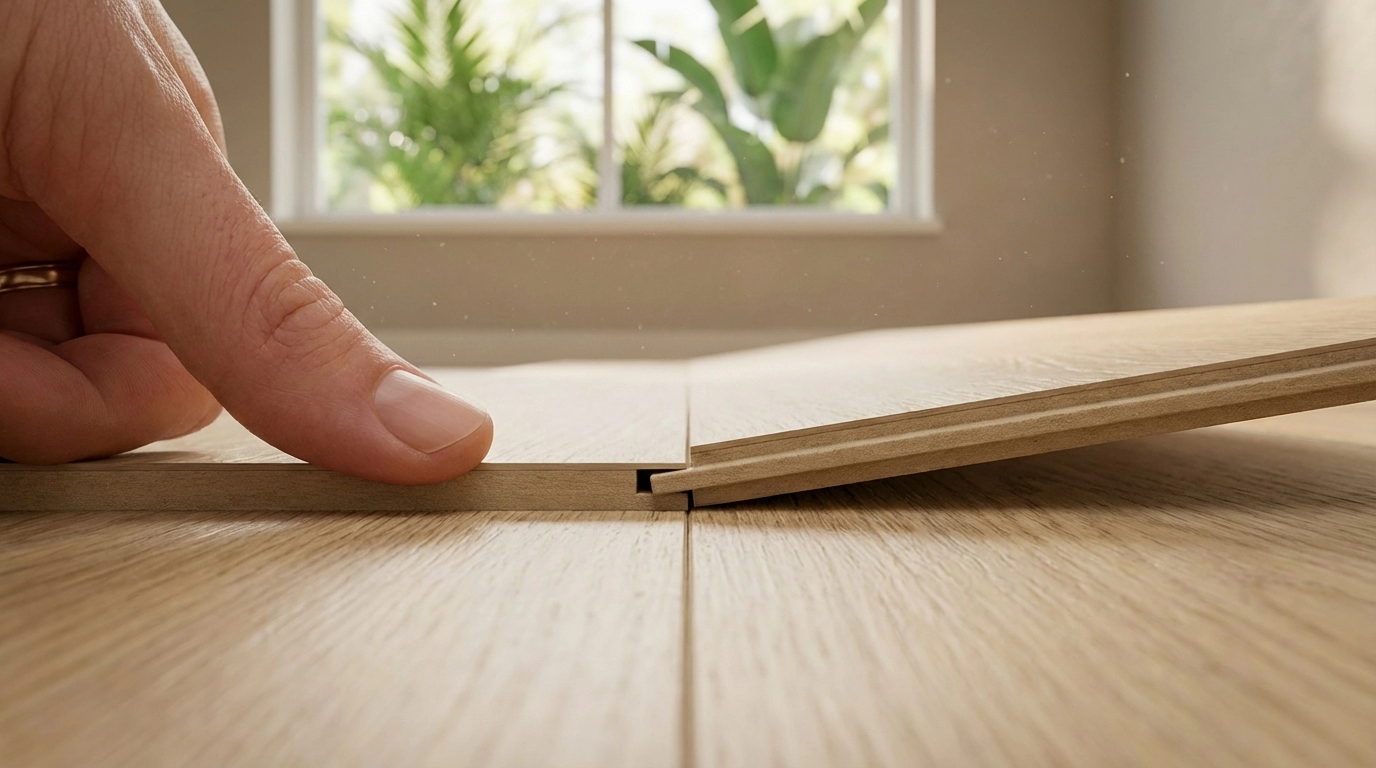
Hèm khóa
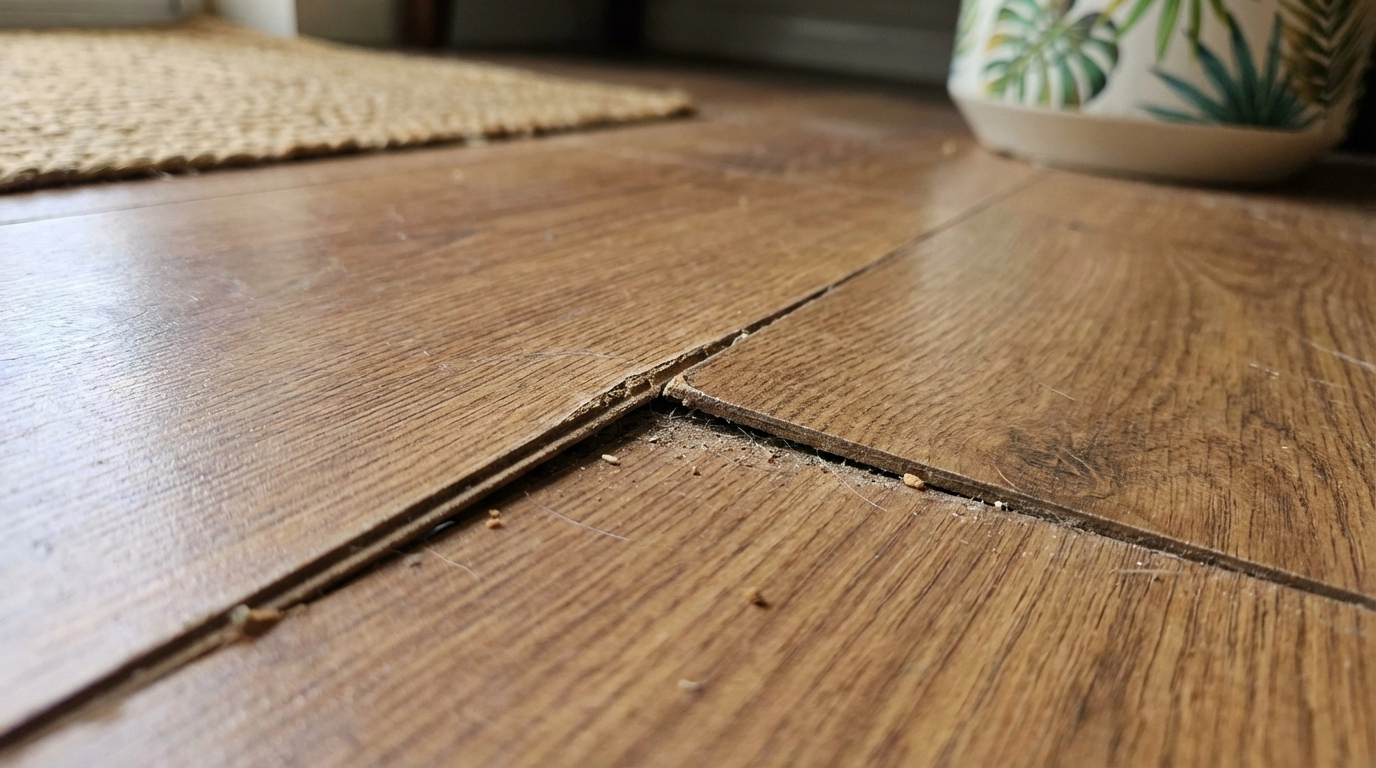
Hèm khóa tốt giúp sàn liên kết chắc, hạn chế hở mạch và dễ thi công. Hèm kém chất lượng thường là nguyên nhân gây kêu sàn, bung mép hoặc khó lắp đặt.
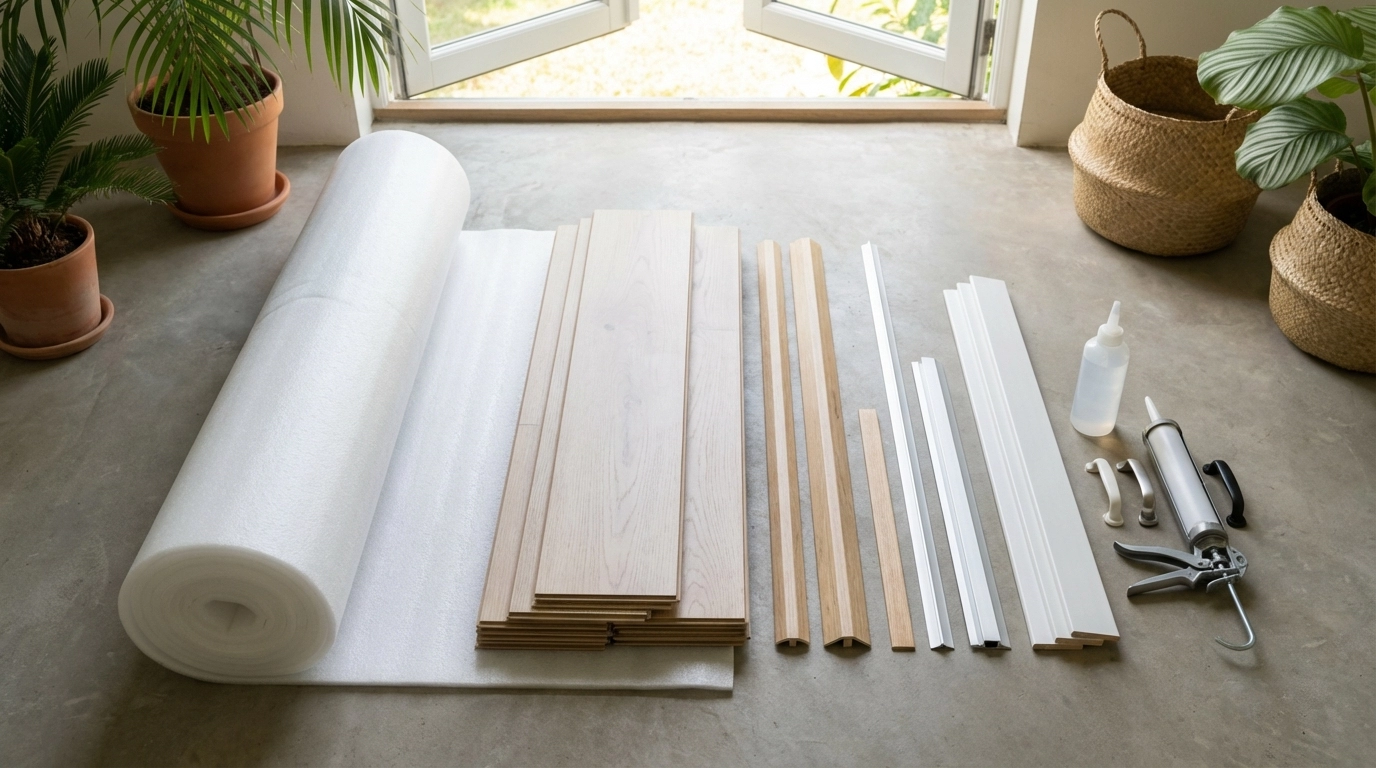
Phụ kiện đi kèm
Len chân tường, foam lót, nẹp kết thúc, silicon và vật tư phụ đều ảnh hưởng đến độ bền và thẩm mỹ tổng thể. Nhiều công trình lỗi không nằm ở tấm sàn mà nằm ở phụ kiện thi công kém.
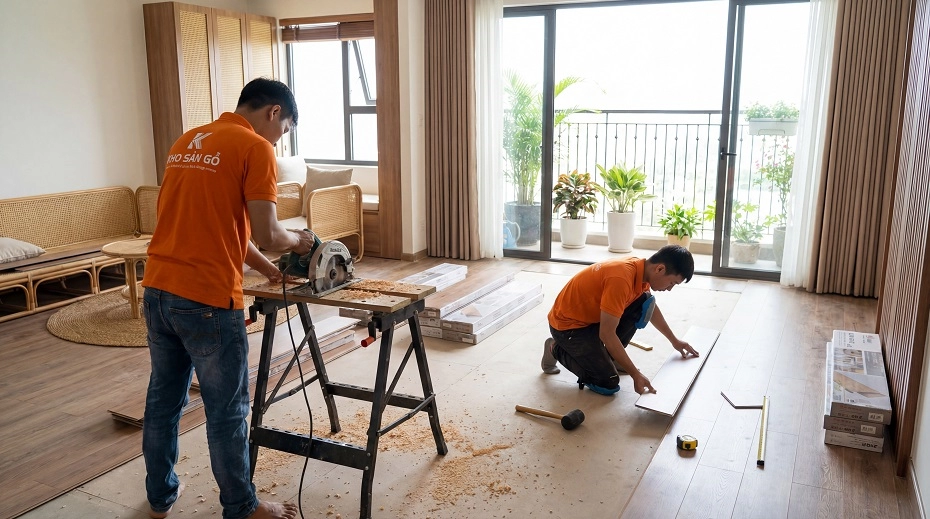
5. Thi công đúng kỹ thuật gồm những gì?
Thi công là bước quyết định cuối cùng. Sàn tốt đến đâu mà lắp sai thì vẫn hỏng.
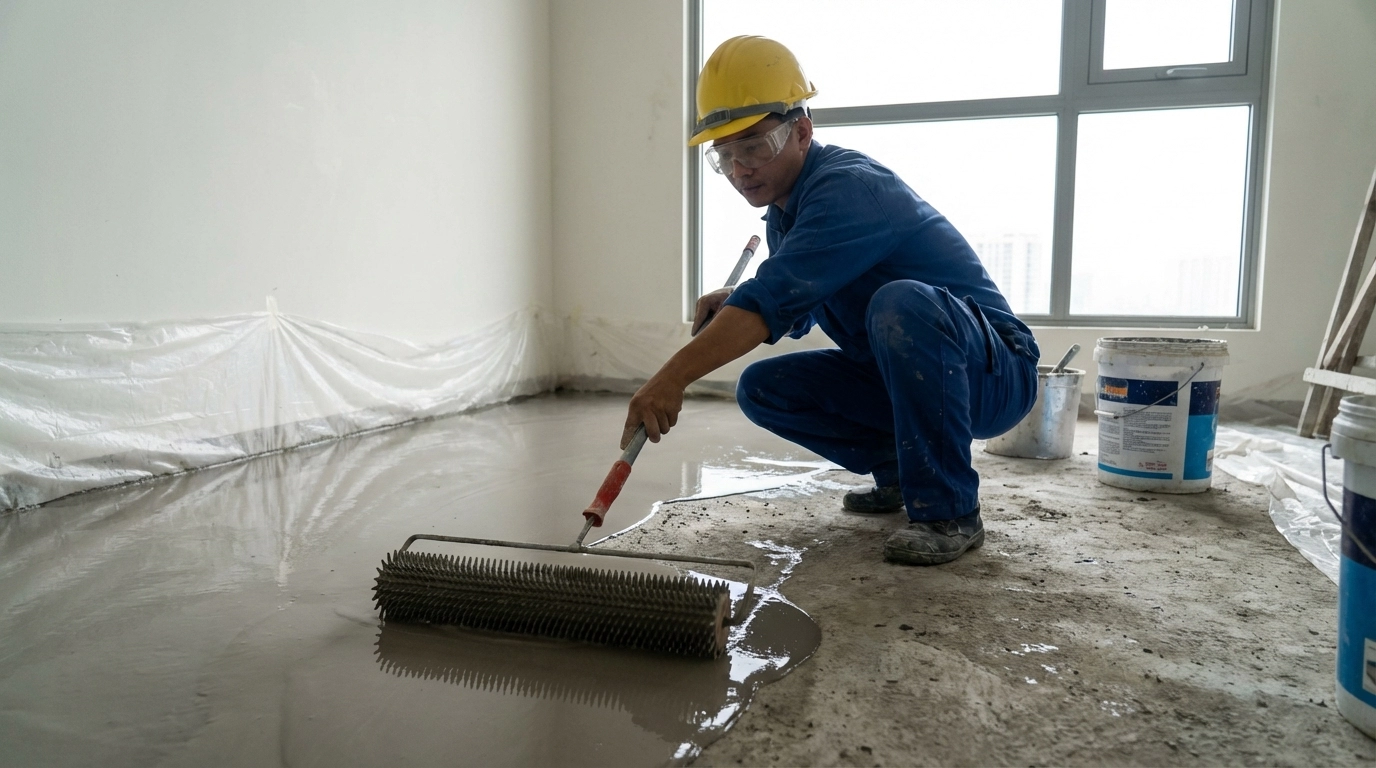
Xử lý mặt nền
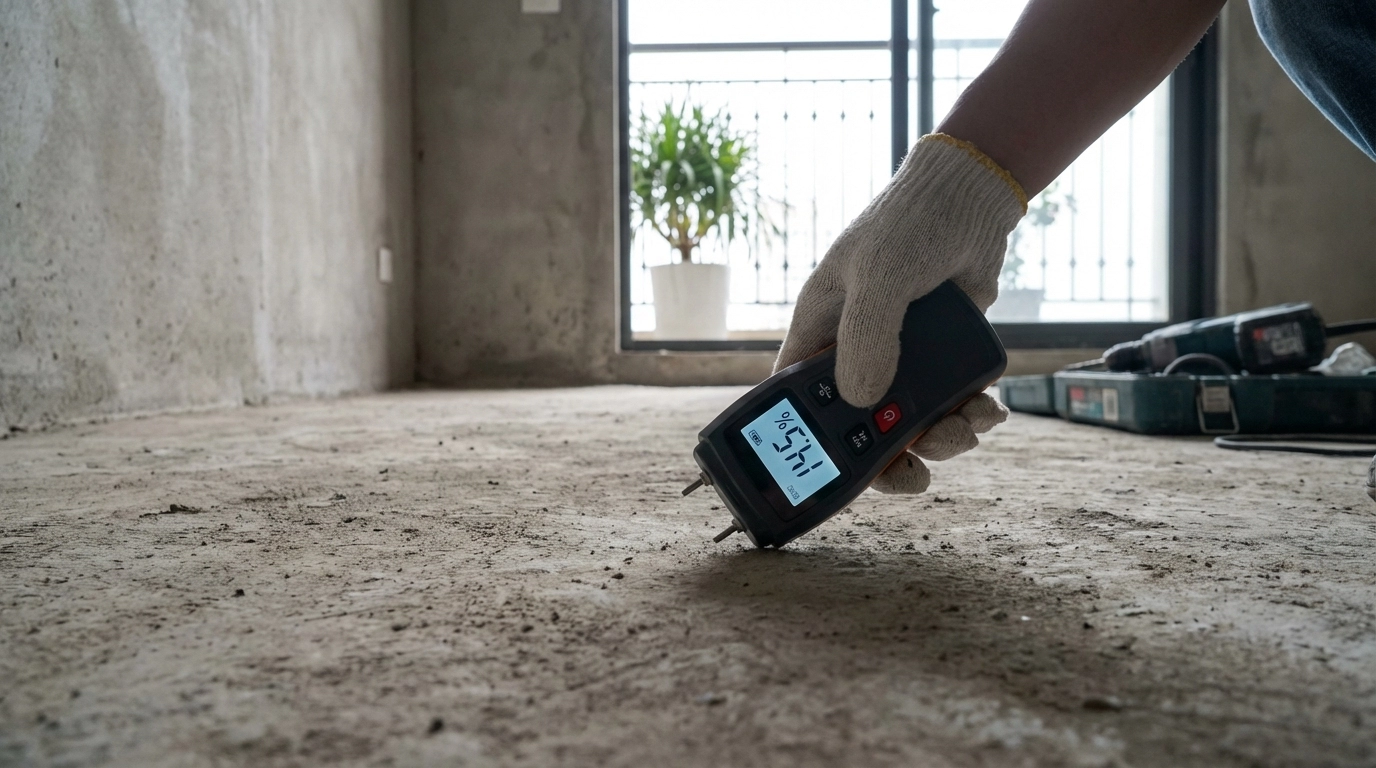
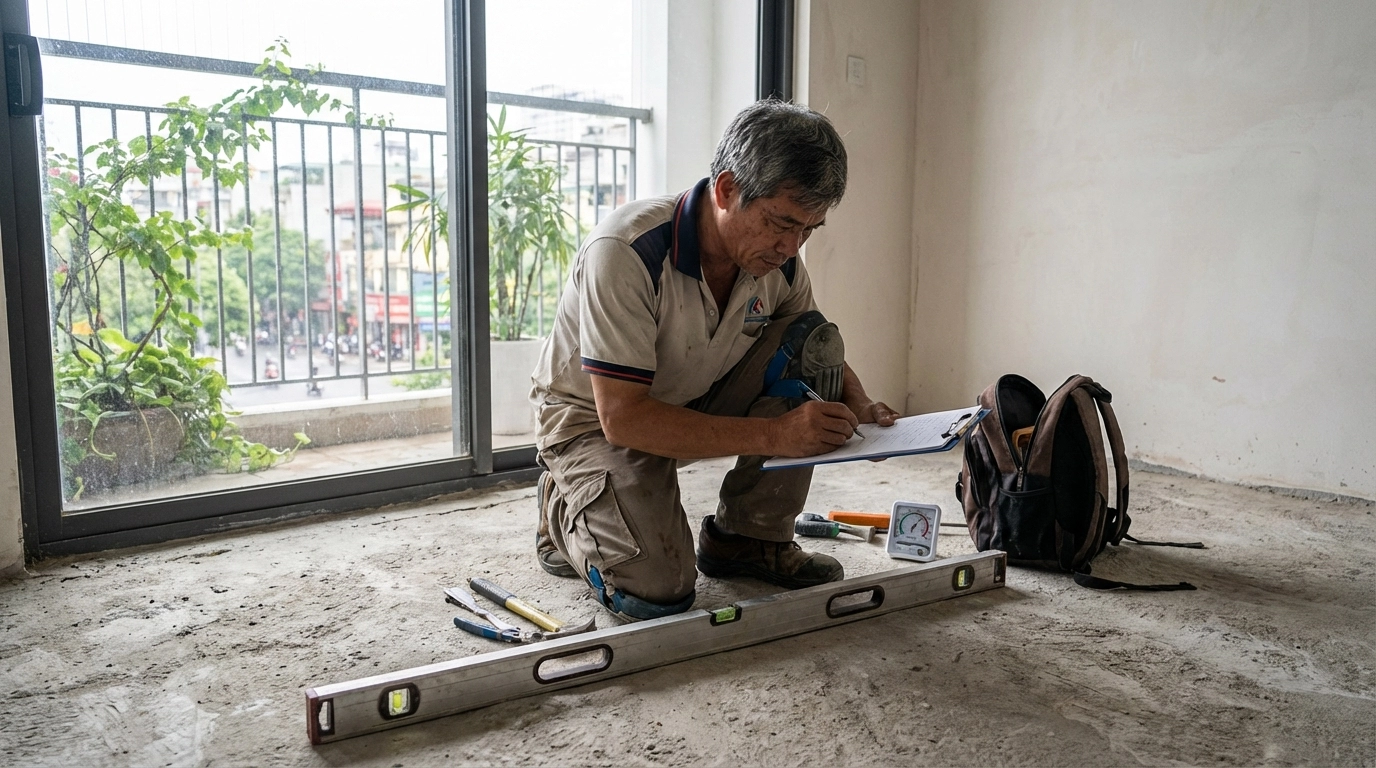
Nền phải sạch, khô, phẳng và ổn định. Nếu nền gồ ghề, lún hoặc ẩm cao, cần xử lý trước khi lắp sàn. Đây là nguyên tắc bắt buộc.
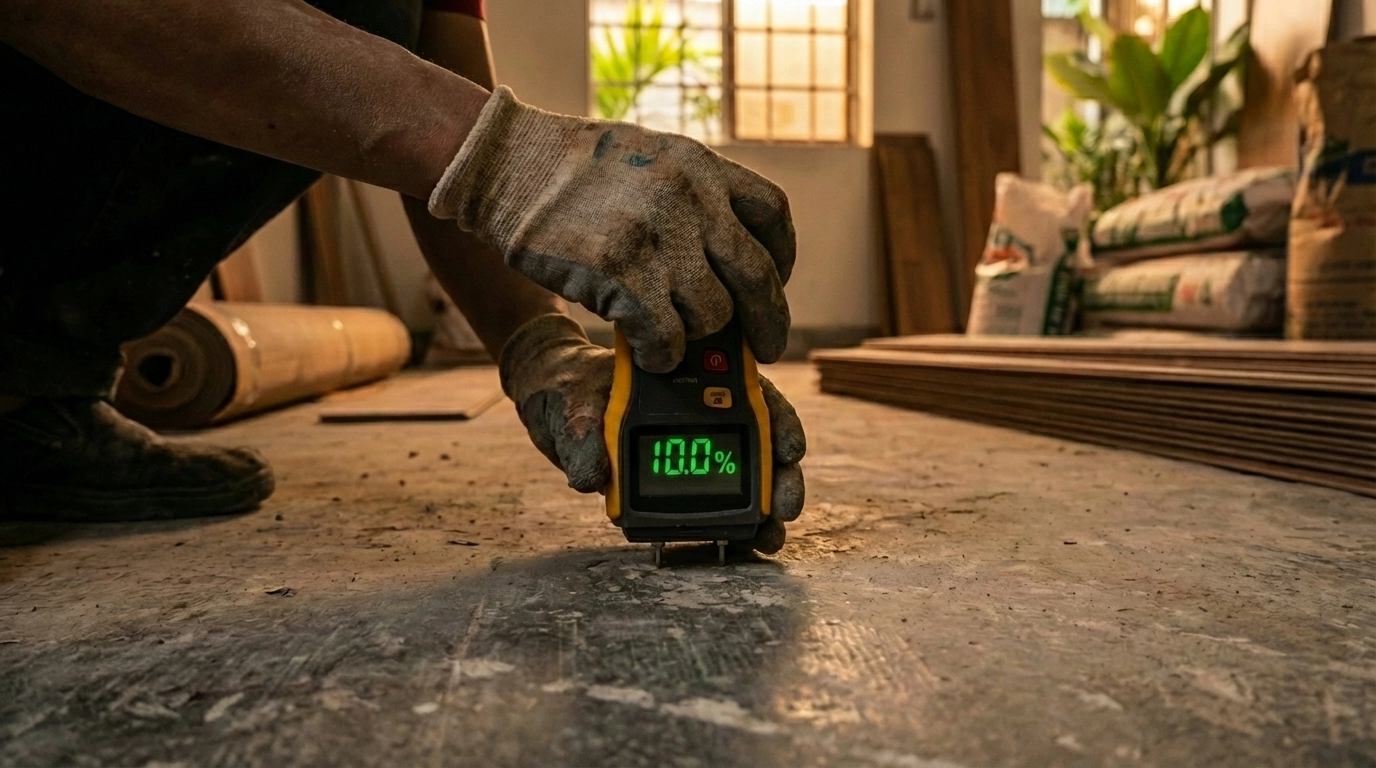
Đo độ ẩm nền
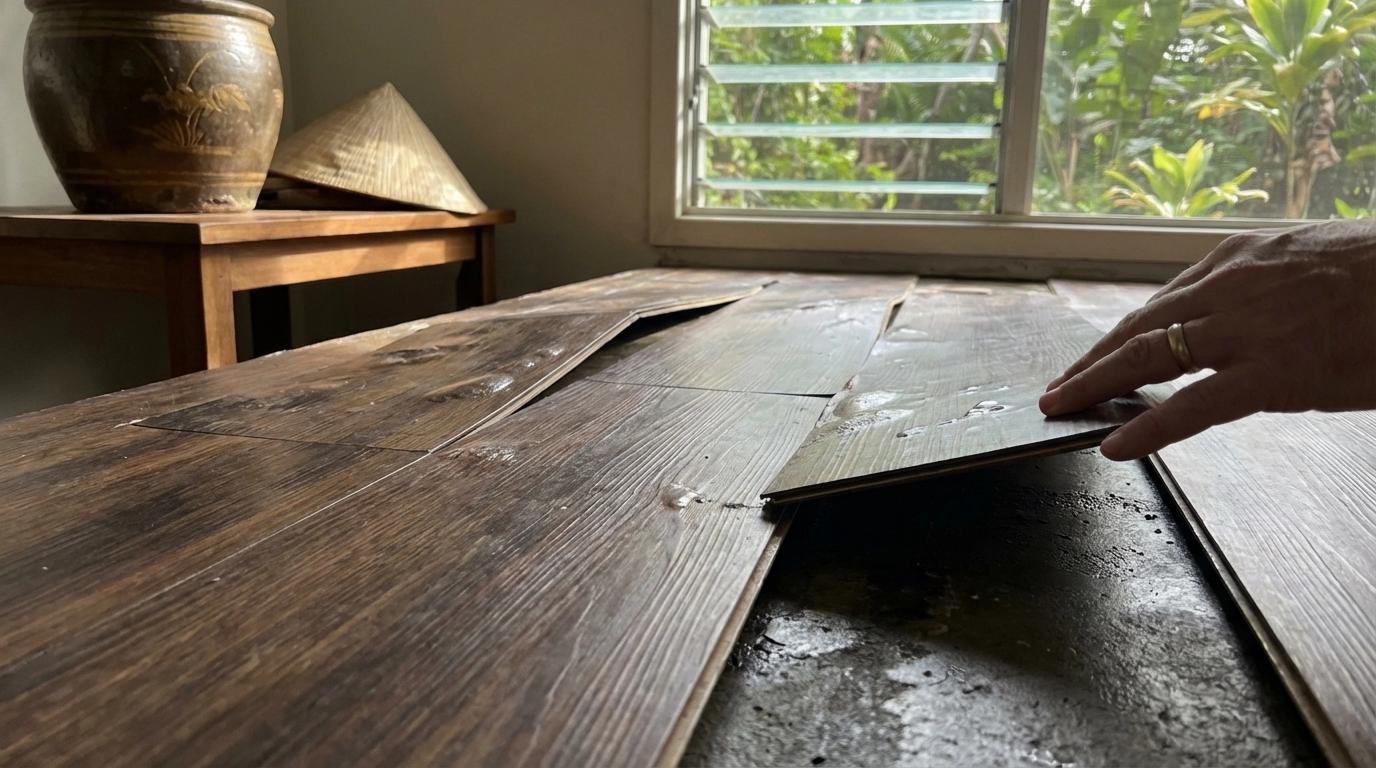
Với sàn gỗ, độ ẩm nền là yếu tố cực kỳ quan trọng. Nền ẩm sẽ làm giảm tuổi thọ sàn, gây phồng, cong hoặc hở mạch sau một thời gian sử dụng.
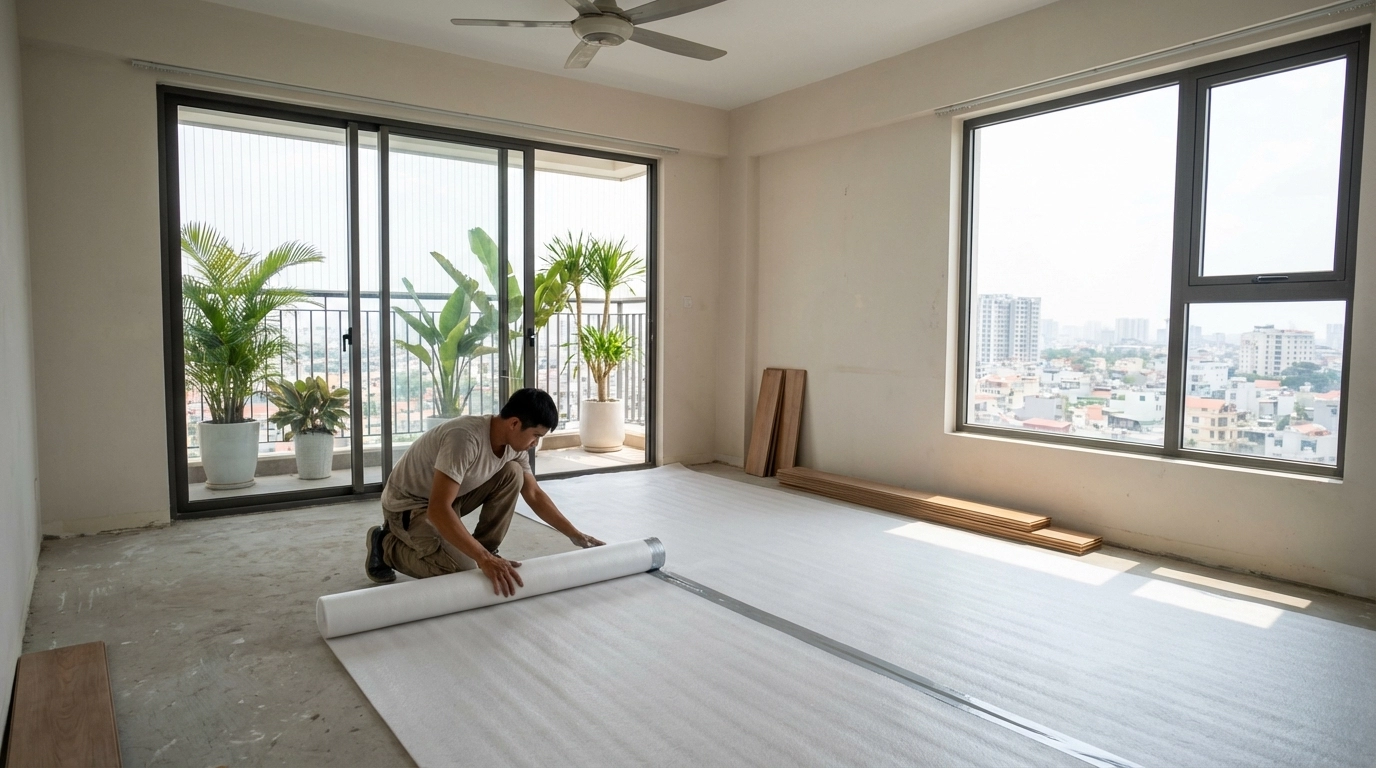
Trải lớp lót đúng cách
Lớp foam hoặc lớp lót có tác dụng giảm ồn, hỗ trợ cân bằng nền và bảo vệ sàn. Nếu lót sai, sàn có thể bị bồng bềnh hoặc mất độ ổn định.
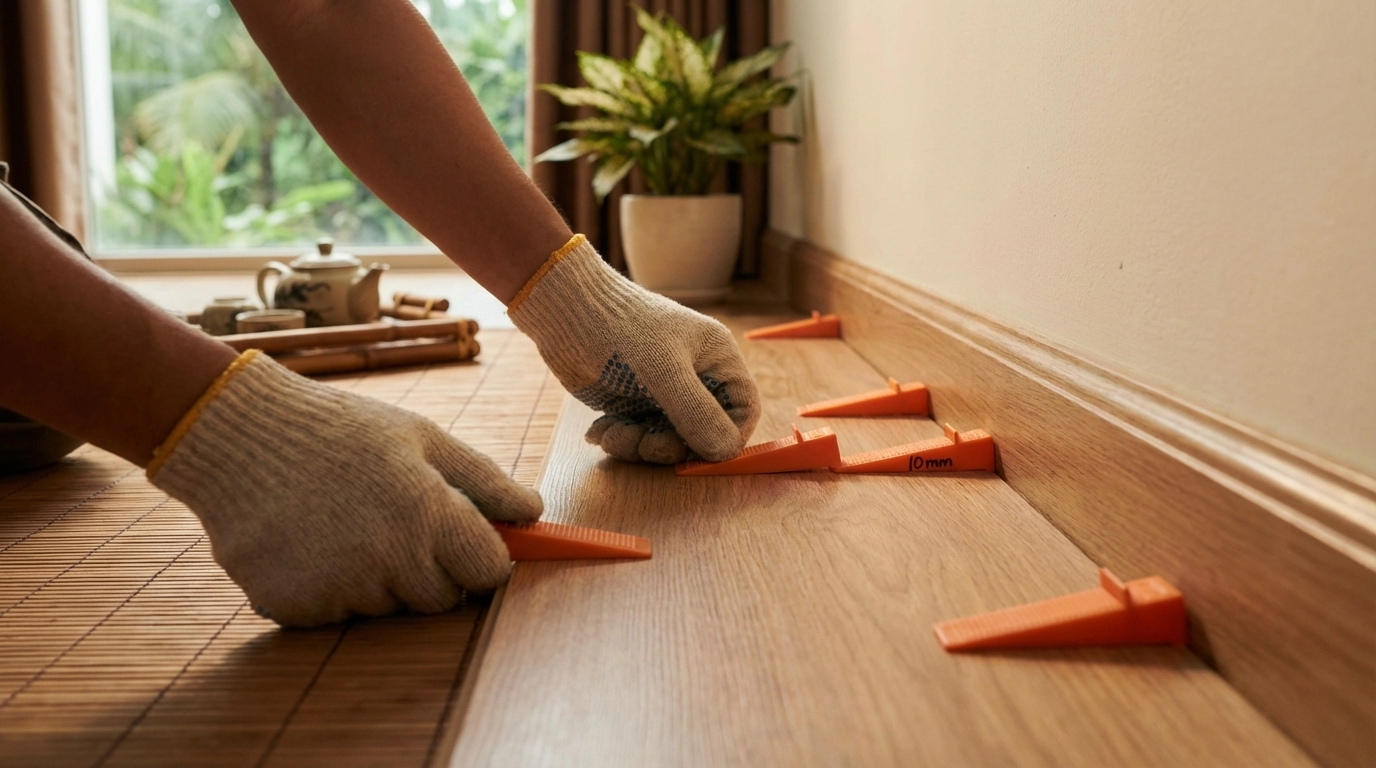
Chừa khe giãn nở
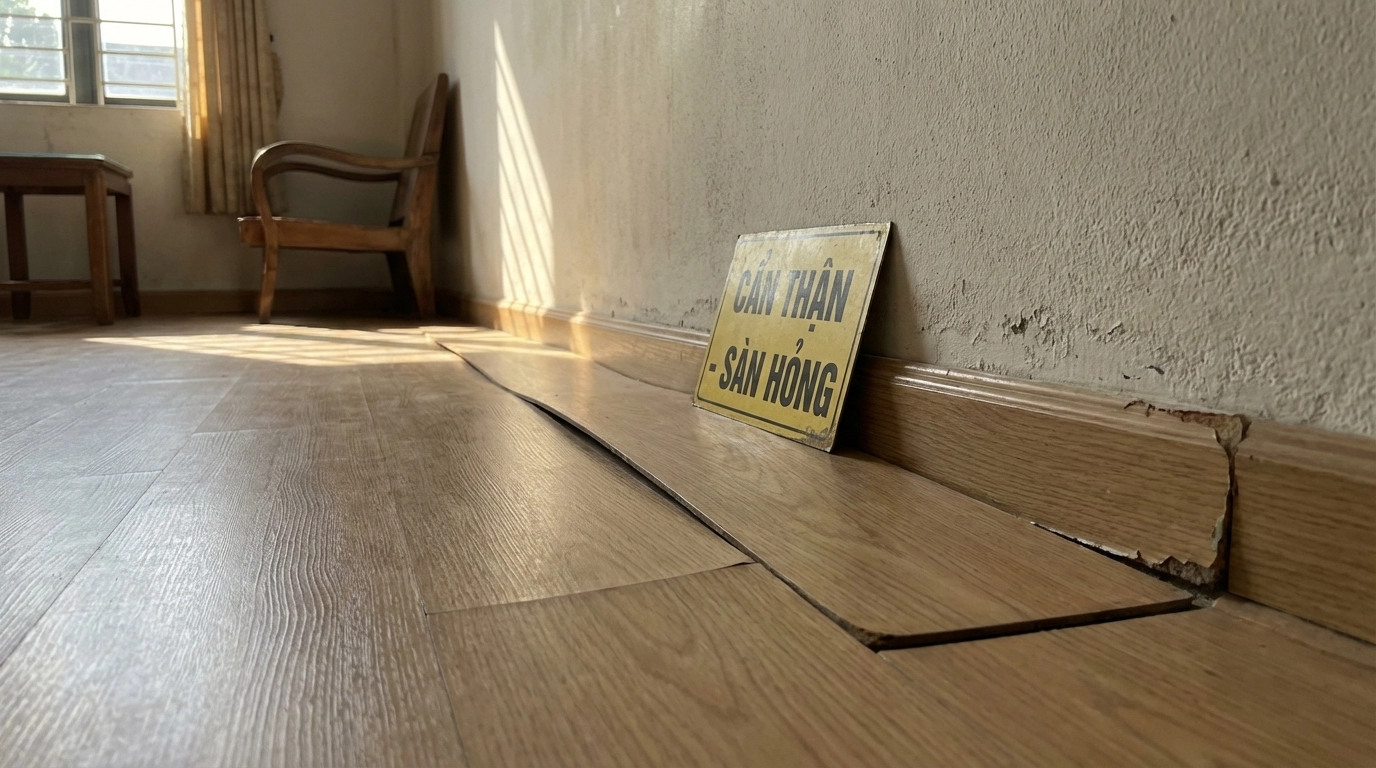
Đây là lỗi rất nhiều người bỏ qua. Sàn cần có khoảng giãn nở ở mép tường để thích ứng với thay đổi nhiệt độ và độ ẩm. Nếu thi công quá sát, sàn dễ bị đội, cong mép hoặc gãy hèm.
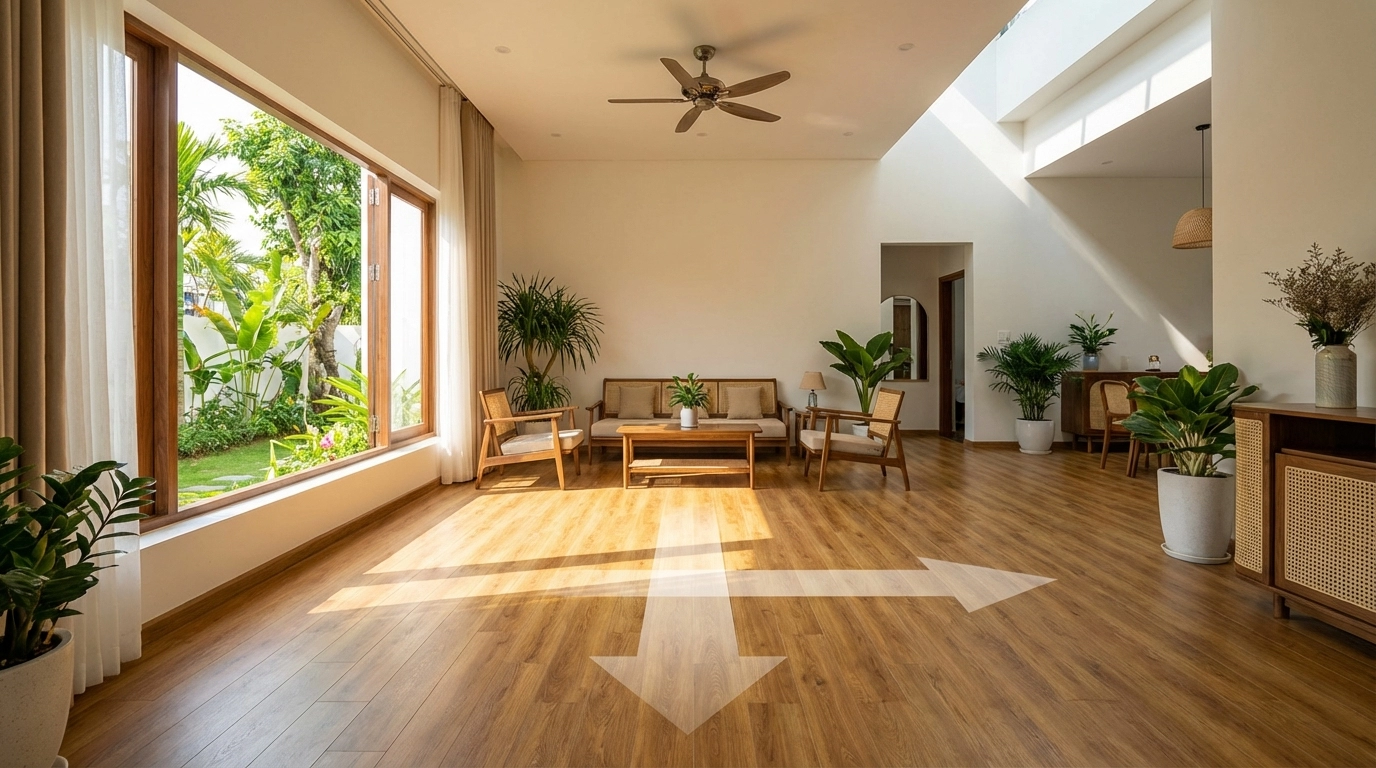
Lắp đúng hướng và đúng quy luật
Sàn nên được thi công theo hướng hợp với ánh sáng và chiều dài không gian để tạo cảm giác rộng hơn. Đồng thời, các hàng ván phải được so le đúng kỹ thuật để tăng độ chắc chắn và thẩm mỹ.
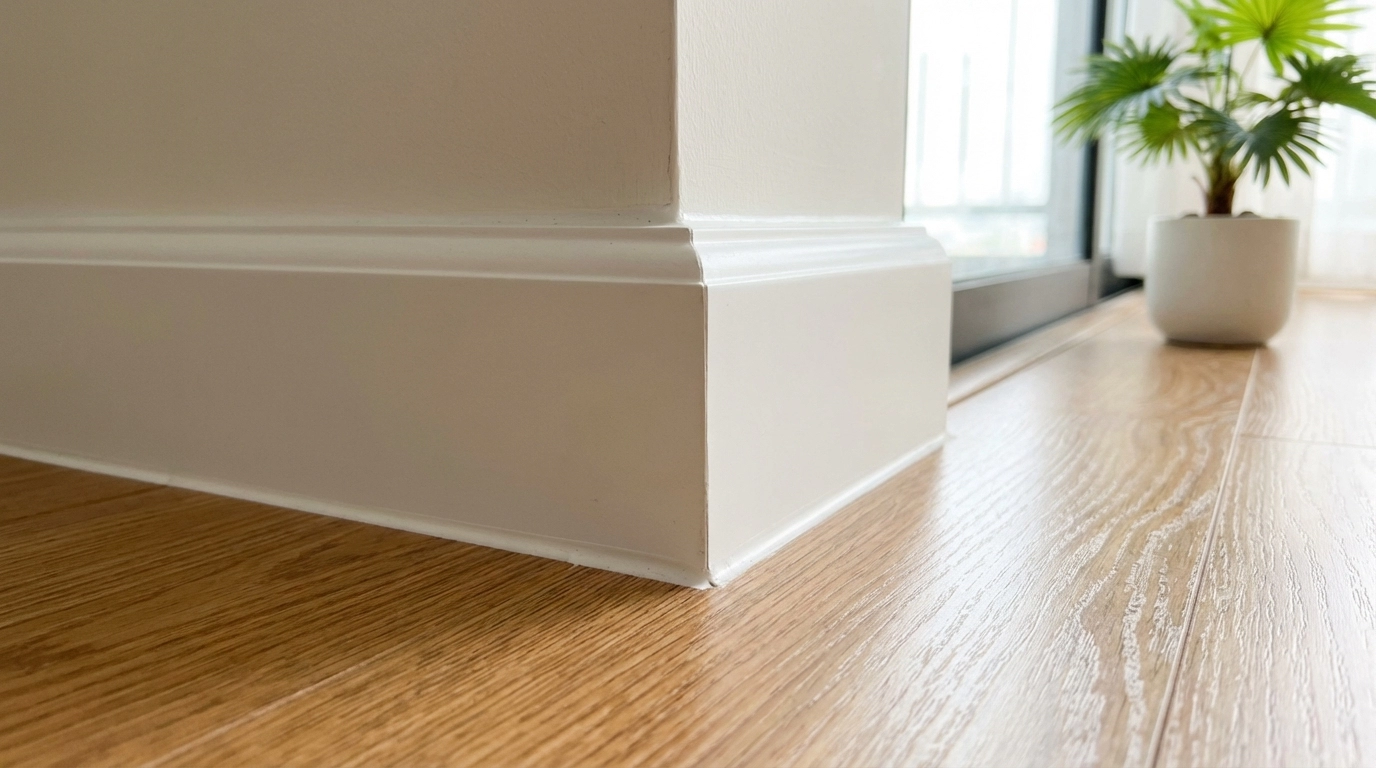
Hoàn thiện nẹp và len
Phần hoàn thiện quyết định cảm nhận cuối cùng của công trình. Nẹp, len và các điểm giao chuyển khu vực phải được xử lý gọn, đẹp và chắc chắn.
6. Những lỗi thi công thường gặp
Một số lỗi phổ biến trong thực tế gồm:
-
nền chưa xử lý đã lắp sàn
-
không chừa khe giãn nở
-
dùng foam kém chất lượng,
-
cắt góc ẩu, mép hở,
-
lắp trên nền ẩm
-
ghép hèm không khít
-
chọn sai loại sàn cho khu vực ẩm.
Những lỗi này ban đầu có thể chưa thấy rõ, nhưng sau vài tháng đến một năm sẽ bắt đầu bộc lộ. Đó là lý do nhiều công trình “mới lắp xong rất đẹp” nhưng nhanh chóng xuống cấp.
7. Kinh nghiệm chọn đơn vị thi công
Một đơn vị tốt không chỉ bán vật liệu, mà còn phải biết đánh giá công trình, tư vấn vật liệu phù hợp và thi công có trách nhiệm.
Bạn nên ưu tiên đơn vị:
-
có kinh nghiệm thực tế,
-
biết khảo sát nền trước khi báo giá,
-
tư vấn rõ ưu nhược điểm từng loại sàn

-
báo vật tư và phụ kiện minh bạch,
-
có bảo hành sau thi công,
-
làm đúng quy trình, không làm nhanh kiểu đối phó.
Một người thợ giỏi có thể nhìn nền, nhìn không gian và đưa ra phương án hợp lý ngay từ đầu. Đó là giá trị rất lớn.
8. Kết luận
Tư vấn chọn sàn & thi công đúng kỹ thuật không phải là câu chuyện chọn mẫu đẹp nhất, mà là chọn giải pháp phù hợp nhất cho công trình. Một loại sàn tốt phải đi cùng nền nhà tốt, phụ kiện tốt và tay nghề thi công chuẩn. Khi ba yếu tố này khớp nhau, công trình sẽ đẹp lâu, bền lâu và ít phát sinh vấn đề.
Nói ngắn gọn:
-
Muốn đẹp và sang → cân nhắc sàn gỗ công nghiệp.
-
Muốn chống nước và thực dụng → cân nhắc sàn nhựa.
-
Muốn bền và ổn định → phải thi công đúng kỹ thuật.
Chọn sàn là chọn nền cho cả không gian sống. Và nền tảng tốt luôn bắt đầu từ sự hiểu đúng ngay từ đầu.
Câu Hỏi Thường Gặp (FAQ) Về Chọn Sàn & Thi Công Đúng Kỹ Thuật
1. Nên chọn sàn gỗ công nghiệp hay sàn nhựa cho công trình?
Tùy vào khu vực lắp đặt và nhu cầu sử dụng. Sàn gỗ công nghiệp phù hợp với phòng khách, phòng ngủ, khu vực khô ráo và những không gian cần cảm giác sang trọng, ấm áp. Sàn nhựa phù hợp hơn với tầng trệt, khu vực ẩm, mặt bằng kinh doanh hoặc nơi cần chống nước và vệ sinh thường xuyên.
2. Vì sao sàn sau khi thi công bị kêu, phồng hoặc hở hèm?
Nguyên nhân thường đến từ việc nền chưa được xử lý kỹ, nền còn ẩm, không chừa khe giãn nở, dùng foam lót kém chất lượng hoặc lắp hèm khóa không khít. Ngoài chất lượng vật liệu, tay nghề thi công và quy trình lắp đặt cũng ảnh hưởng trực tiếp đến độ bền của sàn.
3. Trước khi thi công sàn cần kiểm tra những gì?
Trước khi thi công cần kiểm tra mặt nền có sạch, khô, phẳng và ổn định hay không. Với sàn gỗ, cần chú ý thêm độ ẩm nền để hạn chế phồng rộp, cong mép về sau. Ngoài ra, nên chuẩn bị đúng lớp lót, phụ kiện, nẹp, len chân tường và chừa khe giãn nở đúng kỹ thuật.





Vui lòng đăng nhập để bình luận bài viết này.